Cooking Oils & Fats
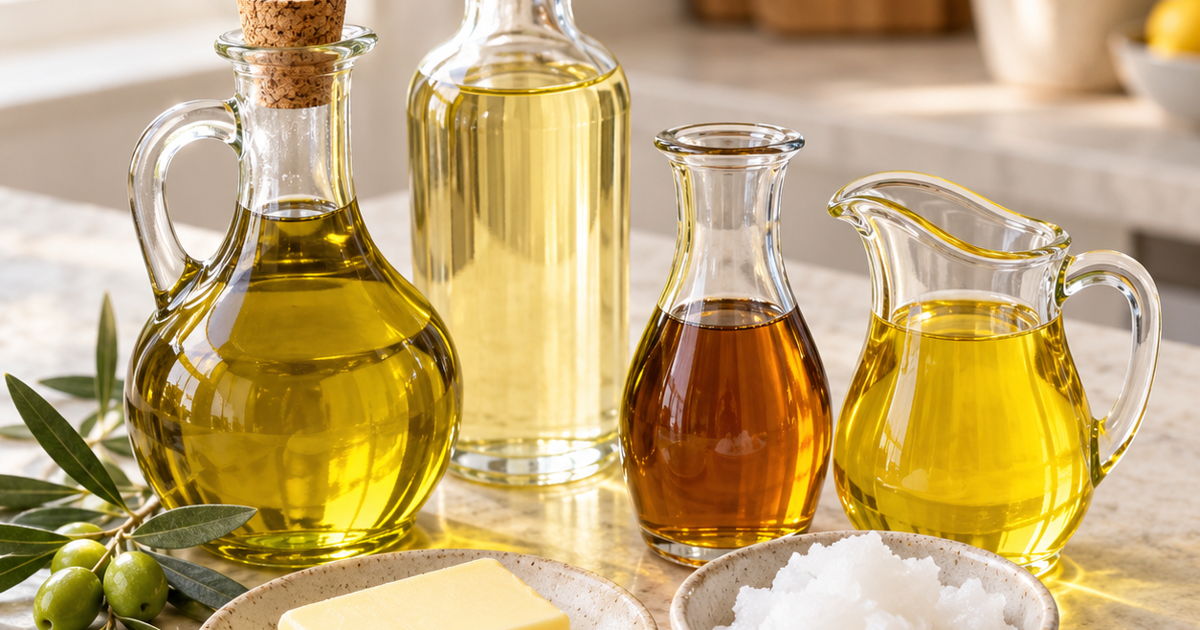
Cooking oils and fats add flavor, moisture, richness, and texture to sweet and savory recipes. They are widely used for sautéing, frying, roasting, grilling, baking, making sauces, and preparing salad dressings. Popular options include olive oil, vegetable oil, avocado oil, coconut oil, butter, and other animal or plant-based fats. Explore recipes with cooking oils and fats and discover delicious ideas for breakfast, lunch, dinner, baking, appetizers, and homemade comfort food.
Best Recipes Using Cooking Oils and Fats
Read more about cooking oils and fats
What Are Cooking Oils and Fats?
Cooking oils and fats are ingredients used to transfer heat, prevent sticking, add flavor, retain moisture, and create texture. Oils are generally liquid at room temperature, while fats such as butter, shortening, and some coconut oils may be solid or semi-solid.
Each oil or fat has its own flavor, consistency, and response to heat. The best choice depends on the cooking method and the desired result.
Popular Types of Cooking Oils
Common cooking oils include:
- Olive oil – flavorful and versatile for sautéing, roasting, marinades, sauces, and salad dressings.
- Extra-virgin olive oil – known for its distinctive flavor and commonly used in dressings, dips, sauces, and moderate-heat cooking.
- Vegetable oil – neutral in flavor and widely used for frying, sautéing, and baking.
- Canola oil – mild and versatile for cooking, frying, roasting, and baking.
- Avocado oil – suitable for sautéing, roasting, grilling, dressings, and other recipes.
- Coconut oil – adds richness and may contribute a coconut flavor, depending on whether it is refined or unrefined.
- Sesame oil – adds a distinctive nutty flavor to stir-fries, marinades, dressings, noodles, and sauces.
Popular Types of Cooking Fats
Common cooking fats include:
- Butter – adds rich flavor to sautéed dishes, sauces, baked goods, and desserts.
- Clarified butter – butter with most of the water and milk solids removed, making it suitable for higher-heat cooking.
- Ghee – a type of clarified butter with a rich, nutty flavor.
- Shortening – a solid fat commonly used in pastries, pie crusts, cookies, and frying.
- Lard – rendered pork fat used in pastries, frying, biscuits, and savory recipes.
- Rendered poultry fat – adds savory flavor to potatoes, vegetables, soups, and traditional dishes.
How to Choose a Cooking Oil or Fat
Choose an oil or fat based on the cooking temperature, flavor, and texture required by the recipe. Neutral oils are useful when you do not want the fat to influence the flavor, while butter, olive oil, sesame oil, coconut oil, and animal fats add their own distinctive taste.
For frying and high-temperature cooking, select a product labeled as suitable for the intended heat. For dressings, dips, and finishing dishes, choose an oil with a flavor that complements the other ingredients.
What Is a Smoke Point?
A smoke point is the temperature at which an oil or fat begins to produce visible smoke and break down. Smoke points vary according to the type of fat, processing method, freshness, and purity.
Refined oils generally tolerate higher temperatures than their unrefined versions. Avoid allowing oil to smoke heavily. If it begins smoking unexpectedly, carefully remove the pan from the heat and allow it to cool.
How to Cook With Oils and Fats
Use a measured amount of oil or fat to coat the pan or ingredients evenly. Preheat it gradually and add food carefully to reduce splattering.
For roasting, toss vegetables, meat, or potatoes with oil and seasonings before placing them in the oven. For sautéing, use enough fat to lightly cover the cooking surface. For baking, follow the recipe measurements because changing the type or amount of fat can affect texture and structure.
Cooking Oil and Fat Substitutes
The best substitute depends on the recipe and cooking method:
- Use vegetable, canola, or another neutral oil when a recipe requires flavorless cooking oil.
- Use olive oil instead of butter in many savory dishes, marinades, dressings, and selected baked recipes.
- Use melted butter instead of oil in some cakes, muffins, pancakes, and savory recipes for a richer flavor.
- Use avocado oil for roasting, sautéing, grilling, and dressings.
- Use coconut oil when its flavor and solid texture are appropriate for the recipe.
- Use an appropriate plant-based butter or shortening for dairy-free baking and cooking.
Oil and solid fat do not always behave the same way. Substitutions can change the flavor, moisture, spread, tenderness, and structure of baked goods.
How to Store Cooking Oils and Fats
Store cooking oils in tightly sealed containers in a cool, dark place away from direct sunlight, heat, and the stove. Exposure to air, light, and warmth can cause oils to lose quality more quickly.
Follow the package instructions because some oils and fats may require refrigeration after opening. Keep butter and other perishable animal fats refrigerated unless the manufacturer states otherwise.
Discard oil or fat if it develops a stale, paint-like, bitter, or otherwise unpleasant odor or flavor. Do not pour used cooking oil down a sink or drain. Allow it to cool completely, place it in a secure container, and follow local disposal or recycling guidance.
Frequently Asked Questions
Which cooking oil is best for frying?
Choose a fresh oil with a neutral flavor and a smoke point suitable for the frying temperature. Vegetable, canola, peanut, and some refined oils are commonly used, depending on the recipe and allergy considerations.
Can olive oil be used for cooking?
Yes. Olive oil can be used for sautéing, roasting, sauces, marinades, and many other recipes. Choose the type of olive oil according to the cooking temperature and desired flavor.
Can butter replace cooking oil?
Butter can replace oil in some savory and baked recipes, but it contains water and milk solids, so the finished flavor and texture may change. It can also brown or burn more quickly than many refined oils.
Can cooking oil replace butter in baking?
Oil can replace melted butter in some cakes, muffins, quick breads, and brownies. However, it may not work properly in recipes that require softened butter to be creamed with sugar.
How can you tell if cooking oil has gone bad?
Oil that smells stale, bitter, waxy, paint-like, or otherwise unpleasant may be rancid. Discard it if its aroma or flavor has noticeably changed.
Are cooking oils and fats gluten-free?
Plain cooking oils, butter, ghee, lard, and shortening generally do not contain gluten ingredients. Flavored products, cooking sprays, and blended fats may contain additives, so check the package for a certified gluten-free label when necessary.