Dairy Ingredients
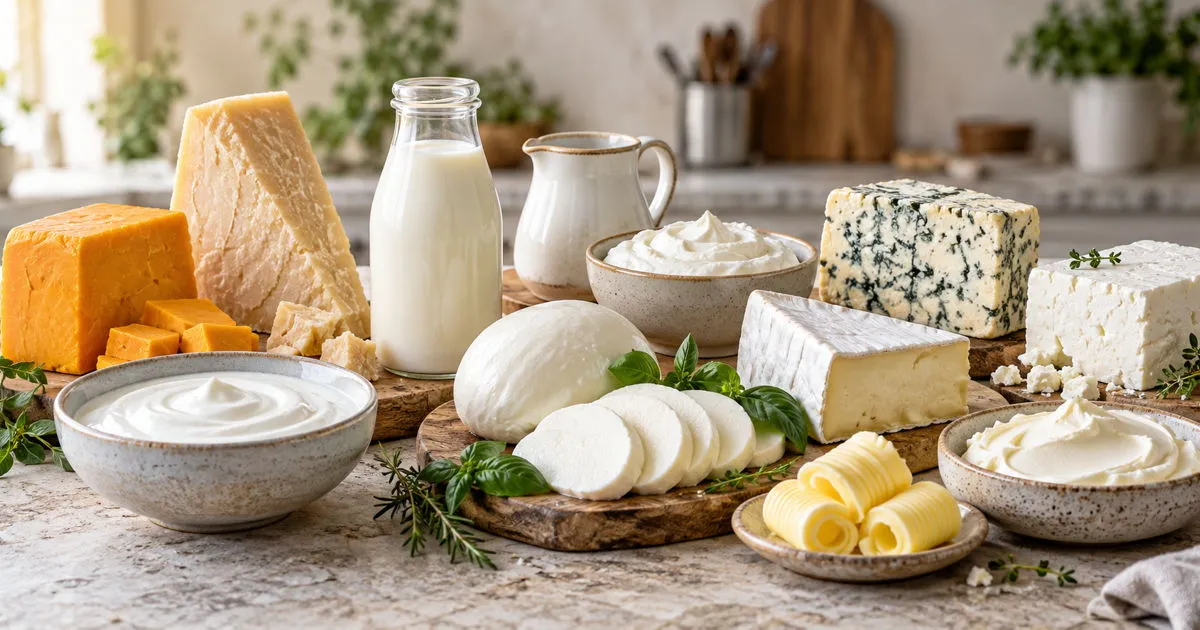
Dairy ingredients are common kitchen staples used in breakfast recipes, creamy pasta sauces, casseroles, baked goods, soups, desserts, smoothies, and comfort-food dishes. This group includes milk, cheese, cream, yogurt, butter, sour cream, cottage cheese, and other foods made from milk.
Dairy ingredients can add richness, moisture, creaminess, protein, fat, and structure to both sweet and savory recipes. Different dairy products behave differently in cooking and baking, so choosing the right ingredient can have a major effect on flavor and texture.
What Are Dairy Ingredients?
Dairy ingredients are foods made from the milk of mammals, most commonly cow’s milk. Common examples include milk, cream, butter, yogurt, cheese, sour cream, and cottage cheese.
Some dairy products are fermented, cultured, churned, aged, or concentrated to create different flavors and textures. These processing methods are what make products such as yogurt, cheese, butter, and sour cream distinct from regular milk.
Popular Types of Dairy Ingredients
- Milk: used in drinks, baking, breakfast recipes, sauces, soups, and desserts.
- Cheese: available in many varieties and used in pasta, sandwiches, casseroles, salads, pizza, and appetizers.
- Heavy cream: adds richness to sauces, soups, whipped cream, and desserts.
- Butter: used for baking, sautéing, sauces, spreads, and finishing dishes.
- Yogurt: used in breakfast bowls, smoothies, marinades, sauces, dips, and baking.
- Sour cream: adds tanginess and creaminess to dips, baked potatoes, tacos, sauces, and baked goods.
- Cottage cheese: provides a creamy texture and is used in breakfasts, salads, pasta dishes, dips, and protein-rich meals.
- Cream cheese: commonly used in cheesecakes, frostings, dips, spreads, and creamy sauces.
Dairy Nutrition
Dairy nutrition varies widely by product. Milk, yogurt, cottage cheese, and many cheeses can provide protein, calcium, phosphorus, vitamin B12, and other nutrients.
Fat content also differs significantly. Whole milk, cream, butter, and many cheeses contain more fat, while low-fat or reduced-fat dairy products contain less. Some dairy products may also be fortified with vitamin D or other nutrients.
Check the nutrition label or individual ingredient page when precise values for calories, protein, fat, carbohydrates, sodium, calcium, or other nutrients are important.
How Dairy Ingredients Work in Cooking
Dairy ingredients play several different roles in cooking. Milk and cream add moisture and richness, butter contributes fat and flavor, cheese adds saltiness and structure, and cultured dairy products such as yogurt and sour cream can contribute acidity and tanginess.
In baking, dairy can affect tenderness, browning, moisture, and flavor. In sauces and soups, milk, cream, cheese, or sour cream can create a smoother and richer consistency.
How to Use Dairy Ingredients
- Breakfast: use milk, yogurt, cottage cheese, cream cheese, or butter in oatmeal, pancakes, eggs, smoothies, and toast.
- Pasta: use cream, cheese, butter, or milk to make rich sauces.
- Casseroles: add cheese, sour cream, milk, or cream for moisture and flavor.
- Baking: use butter, milk, yogurt, sour cream, cream cheese, or buttermilk in cakes, muffins, cookies, and breads.
- Soups: add milk, cream, or cheese to create creamy soups.
- Dips: combine yogurt, sour cream, cream cheese, or cheese with herbs and seasonings.
- Desserts: use cream, milk, butter, yogurt, cream cheese, or mascarpone in puddings, cakes, frostings, and chilled desserts.
- Smoothies: use milk, yogurt, or cottage cheese to add creaminess and protein.
Dairy in Baking
Dairy ingredients are especially important in baking because they can affect moisture, tenderness, richness, browning, and structure. Butter adds fat and flavor, milk hydrates dry ingredients, and yogurt or sour cream can add moisture and acidity.
Different dairy products are not always interchangeable in baking. Replacing heavy cream with milk, for example, changes both fat content and texture, while substituting yogurt for sour cream may alter acidity and consistency.
Full-Fat vs Low-Fat Dairy
Full-fat and low-fat dairy products differ mainly in their fat content, which can affect both nutrition and cooking performance. Full-fat dairy generally provides a richer flavor and creamier texture.
Lower-fat versions can work well in many recipes, but they may produce a thinner texture or behave differently when heated. The best option depends on the dish and the result you want.
Dairy-Free Substitutes
Many dairy ingredients have plant-based alternatives, but substitutes can change flavor, fat content, texture, and cooking behavior.
- Milk: almond milk, oat milk, soy milk, and coconut milk.
- Butter: plant-based butter or certain oils, depending on the recipe.
- Cream: coconut cream or plant-based cooking creams.
- Yogurt: coconut, soy, almond, or other plant-based yogurt alternatives.
- Cheese: plant-based cheese alternatives.
- Sour cream: plant-based sour cream or certain unsweetened dairy-free yogurts.
For baking and sauces, use a substitute designed for the specific purpose whenever possible because fat, protein, and water content can affect the finished result.
How to Store Dairy Ingredients
- Keep refrigerated dairy products cold according to package instructions.
- Return milk, yogurt, cream, sour cream, and cottage cheese to the refrigerator promptly after use.
- Keep cheese tightly wrapped or stored in an appropriate covered container.
- Store butter according to package guidance and the type of butter being used.
- Use clean utensils to avoid introducing contamination into dairy containers.
- Follow product use-by dates and discard dairy that develops signs of spoilage.
Can You Freeze Dairy Products?
Some dairy products can be frozen, but texture may change after thawing. Butter generally freezes well, while milk, cream, yogurt, and certain cheeses may separate or become grainy.
Frozen dairy products that change texture can still work well in cooked or baked recipes. Follow storage recommendations for the specific product before freezing.
Popular Dairy Ingredients
- Milk
- Cheese
- Butter
- Heavy Cream
- Yogurt
- Sour Cream
- Cottage Cheese
- Cream Cheese
- Buttermilk
- Parmesan Cheese
- Mozzarella
- Cheddar Cheese
Recipes with Dairy Ingredients
Explore recipes with dairy ingredients, including creamy pasta dishes, casseroles, baked goods, soups, breakfast recipes, smoothies, sauces, dips, and desserts. From milk and cheese to butter, yogurt, cream, sour cream, and cottage cheese, dairy ingredients add richness, moisture, texture, and flavor to everyday cooking.