
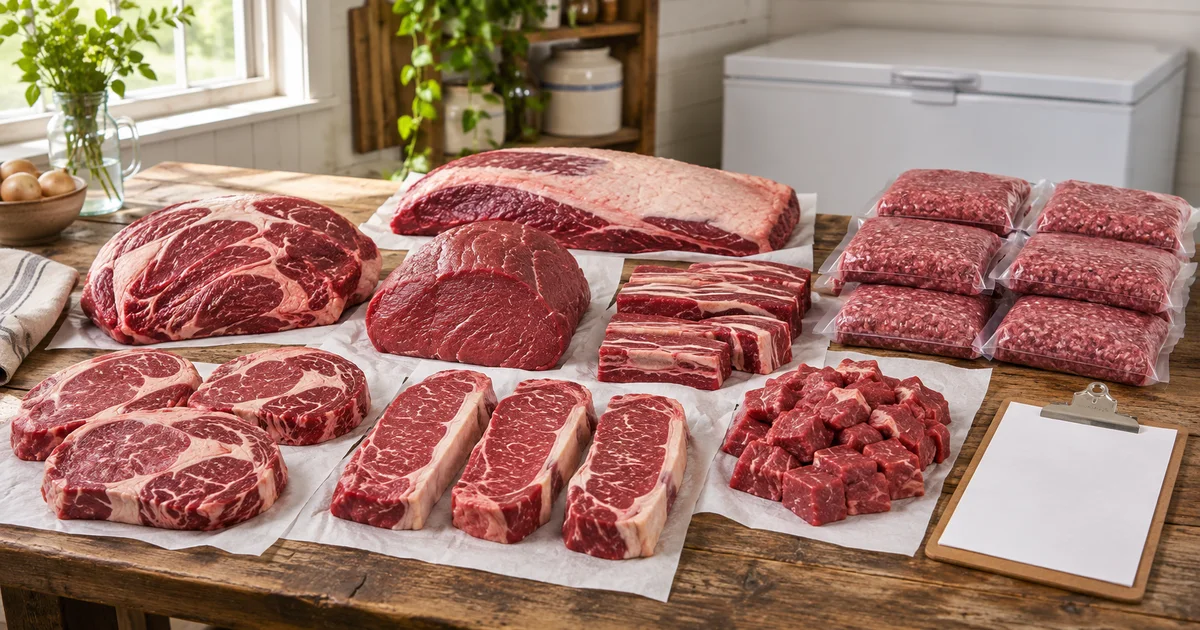
Buying half a beef is a practical way to stock a freezer with steaks, roasts, ribs, brisket, ground beef and slow-cooking cuts in one order. It can offer a closer relationship with a local farm and more control over how the beef is cut and packaged.
The phrase does not mean half of the animal's live weight arrives as wrapped meat. Hide, organs, moisture, bone and trimmed fat account for substantial weight changes, so the live weight, hanging weight and take-home weight are three different numbers.
What Is a Half Beef?
A half beef—also called a side of beef—is one longitudinal half of a processed beef carcass. The farmer raises the animal, a processor harvests and chills it, and a butcher turns the side into retail cuts according to your cut sheet. Some sellers divide a side into two mixed quarters so each buyer receives a balanced assortment of front- and hindquarter cuts.
How Much Meat Do You Get?
Yield depends on the animal's live weight, breed, muscling and fat; the carcass aging period; and your choices for bones, fat trim and boneless cuts. University of Nebraska–Lincoln notes that most fed cattle dress at about 60–64% of live weight. A representative 1,400-pound steer can produce an 880-pound carcass and about 570 pounds of boneless trimmed beef for the whole animal—roughly 285 pounds for one half.
| Stage | Illustrative whole animal | Illustrative half |
|---|---|---|
| Live weight | 1,300–1,400 lb | Not used as the take-home amount |
| Hanging carcass | About 780–896 lb at 60–64% | About 390–448 lb |
| Packaged beef | Often about 500–600 lb | Often about 250–300 lb |
These are planning estimates, not a guarantee. Ask the seller for recent averages from similarly finished animals and the same processor.
Live Weight vs. Hanging Weight vs. Packaged Weight
- Live weight: the animal's weight before harvest.
- Hot carcass weight: the carcass after the hide, head and internal organs are removed, before chilling.
- Hanging weight: the chilled carcass weight used by many farms and processors for billing.
- Packaged weight: the labeled cuts you actually place in the freezer.
Moisture loss during chilling and aging, plus bones and fat removed during cutting, explain why packaged weight is lower than hanging weight.
What Cuts Come in Half a Beef?
A typical order includes cuts from every major section of the animal. Exact quantities depend on steak thickness and whether you choose bone-in or boneless cuts.
- Steaks: ribeye, strip, tenderloin or filet, sirloin, sirloin tip, round and flank.
- Roasts: chuck, arm, rump, round, sirloin tip and brisket.
- Ribs: short ribs, plate ribs and sometimes beef back ribs.
- Everyday packages: ground beef, stew meat, soup bones and sometimes cubed steak.
- Optional items: liver, heart, tongue, oxtail, marrow bones, suet and other fat for rendering.
How Much Freezer Space?
Plan on approximately 8 cubic feet of dedicated freezer space for half a beef. UNL gives the same estimate, while University of Missouri Extension uses a rule of about 1 cubic foot for every 35–40 pounds of packaged meat. Leave room around packages at first so cold air can circulate and the load freezes efficiently.
Chest or upright freezer?
A chest freezer is usually efficient and holds cold air well when opened, but packages at the bottom can be harder to reach. An upright freezer is easier to organize. Whichever style you choose, use baskets or labeled zones and keep a freezer thermometer visible.
How to Complete the Cut Sheet
The cut sheet tells the processor how you want the side divided. Before the deadline, decide:
- Steak thickness—often 1 to 1½ inches.
- How many steaks per package.
- Roast size—commonly 3 to 4 pounds.
- Bone-in or boneless ribeye and strip steaks.
- T-bones and porterhouses, or separate strip steaks and tenderloin.
- Ground beef package size and preferred lean-to-fat ratio.
- Whether brisket stays whole or is split.
- Whether you want short ribs, flank, skirt, soup bones, organs and fat.
- Vacuum sealing versus freezer paper.
Some choices trade one cut for another because the cuts occupy the same part of the carcass. For example, choosing T-bones and porterhouses means you will not also receive separate New York strips and the full tenderloin from that section.
Questions to Ask Before Paying a Deposit
- Is the quoted price based on live, hanging or packaged weight?
- Are slaughter, cut-and-wrap, vacuum sealing and specialty cuts included?
- What is the expected hanging-weight range and recent packaged yield?
- How was the animal raised and finished—grass-finished, grain-finished or a combination?
- How long will the carcass be aged?
- Who is the processor, and when is pickup expected?
- Are the packages labeled with cut name, weight and packing date?
- Can you request organs, bones and fat, or are they sold separately?
How Half-Beef Pricing Works
Many farms charge a deposit, then bill the remaining amount by hanging weight. Processing may appear on a separate butcher invoice. To estimate the total, multiply the expected half-carcass hanging weight by the farm's rate, add slaughter and processing charges, then include optional fees for patties, tenderizing, jerky or special packaging. Divide that all-in total by the expected packaged weight to understand the approximate take-home cost per pound.
Bone-In or Boneless?
Bone-in cuts can provide dramatic steaks, soup bones and rich braising pieces, but they take more freezer space and lower the proportion of edible meat per package. Boneless cuts stack neatly and make portioning easier. A mixed plan—bone-in rib steaks and short ribs, boneless roasts, plus soup bones packed separately—works well for many households.
Aging and Packaging
Beef is commonly aged under refrigeration to improve tenderness and flavor. Longer aging can increase moisture and trim loss, so confirm the processor's standard schedule. Vacuum-sealed packages compact well and make freezer condition easy to inspect; carefully wrapped freezer paper is also effective when seams remain intact.
Pickup, Transport and Freezer Loading
- Confirm the finished package count and approximate weight before pickup.
- Bring clean coolers, insulated blankets or freezer totes, especially for a long drive.
- Check that packages are fully frozen or refrigerator-cold and labels are readable.
- Transfer the beef directly to a freezer at 0°F (−18°C) or below.
- Make a simple inventory by cut and package count before stacking.
- Place frequently used ground beef near the top and larger roasts lower down.
Safe Storage and Thawing
FoodSafety.gov states that foods kept continuously frozen at 0°F (−18°C) or below remain safe indefinitely, although quality declines over time. For best quality, use fresh-beef steaks and roasts within 4–12 months and ground beef within 3–4 months. Thaw in the refrigerator, in cold water changed every 30 minutes, or in the microwave immediately before cooking—never on the counter.
Recipe Ideas for Your Freezer
Use the premium steaks for grass-fed ribeye steak or our petite sirloin steak. Smoke the large plate section as dino beef ribs, turn the brisket into sliced beef brisket, render trimmings with the beef fat guide, and learn how beef suet differs from other fat.
Frequently Asked Questions
How much meat comes with a half beef?
A planning range of 250–300 pounds is common for a 1,300- to 1,400-pound animal, but the seller's recent average is more useful than a universal number.
What size freezer is needed?
Plan on about 8 cubic feet of clear freezer capacity.
Can I choose the cuts?
Usually. Your processor's cut sheet records thickness, package size, bone-in choices and optional items.
Is the price based on packaged weight?
Often it is based on hanging weight, with processing billed separately. Confirm every fee before ordering.
How long will the beef keep?
At 0°F or below it remains safe indefinitely, but steaks and roasts are best within 4–12 months and ground beef within 3–4 months.
Can I split a half with a friend?
Yes. Ask whether the processor can prepare two separate mixed quarters or use one agreed cut sheet and divide labeled packages at pickup.
Sources
- University of Nebraska–Lincoln: How Many Pounds of Meat Can We Expect From a Beef Animal?
- University of Minnesota Extension: Buying Animals for Meat Processing
- University of Missouri Extension: Successfully Direct Marketing Beef
- FoodSafety.gov: Cold Food Storage Chart
Prepared with AI assistance and reviewed against the cited extension and federal food-safety sources. Actual yields, prices and cut availability vary by farm and processor.
Featured image: AI-generated food photography.