
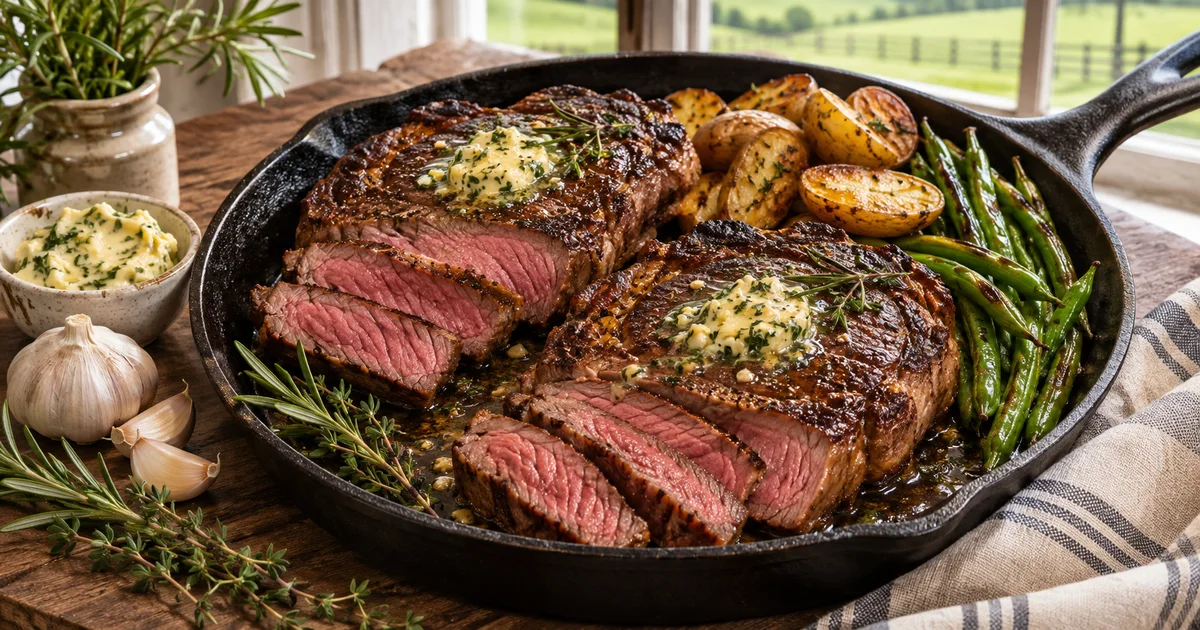
This grass-fed ribeye steak gets the best of two methods: a gentle oven roast for even cooking, followed by a fast cast-iron sear for a dark, savory crust. Garlic, rosemary, thyme, and butter finish the steak without hiding its clean beef flavor.
Grass-fed beef can be slightly leaner and may cook faster than a heavily marbled grain-finished steak. An instant-read thermometer and a short, hot sear make the result much more predictable.
Prep: 10 min · Cook: 20 min · Rest: 10 min · Total: 40 min
Cuisine: American · Course: Dinner
Reverse-Seared Grass-Fed Ribeye with Garlic-Herb Butter
Ingredients
Instructions
- For the best seasoning, salt the steaks on all sides and refrigerate them uncovered on a rack for 1 to 24 hours. If cooking immediately, salt them 30 minutes before roasting. Pat the steaks very dry and season with black pepper.
- Heat the oven to 325°F. Set a wire rack inside a rimmed baking sheet. Place the steaks on the rack and roast until the center registers 125 to 130°F, 12 to 20 minutes depending on thickness. Begin checking early.
- During the final few minutes, heat a heavy cast-iron skillet over high heat until very hot. Add the avocado oil and swirl to coat.
- Add the steaks and sear without moving for 60 to 90 seconds. Turn and sear the second side for 60 seconds. Hold each steak with tongs and brown the fat edge for about 30 seconds.
- Reduce the heat to medium. Add the butter, garlic, rosemary, and thyme. Tilt the skillet and spoon the foaming herb butter over the steaks for 30 to 60 seconds, turning once, until the thickest center reaches 145°F.
- Transfer the steaks to a clean board and rest for at least 3 minutes. Slice across the grain and spoon the garlic-herb butter from the pan over the top.
Estimated per serving: 680 calories · Protein 55 g · Fat 50 g · Carbs 1 g · Sodium 850 mg
What “Grass-Fed” Means
Under the USDA description, grass-fed cattle receive forage after weaning rather than grain or grain by-products, and have continuous pasture access during the growing season. Labels can still vary, so look for clear production claims or third-party certification when that matters to you.
Why Reverse Searing Works
Starting the thick ribeye in the oven heats it gradually from edge to center. The surface also dries as it roasts, so it browns quickly in the skillet. A shorter sear means less of the gray overcooked band that can form beneath the crust.
Choosing a Grass-Fed Ribeye
- Thickness: choose steaks at least 1 1/4 inches thick for easier temperature control.
- Marbling: look for fine white streaks throughout the eye and a substantial outer cap.
- Color: grass-fed beef may have a deeper red muscle color and slightly yellower fat.
- Bone-in or boneless: either works; a bone-in steak may need several extra minutes in the oven.
Dry Brining for Better Flavor
Salt the steaks and refrigerate them uncovered on a rack for up to 24 hours. Salt first draws out moisture, then the seasoned liquid is reabsorbed. The uncovered rest also dries the surface, which promotes browning. If time is short, season 30 minutes before cooking and pat the surface very dry.
Temperature and Food Safety
The USDA safe minimum for beef steaks is 145°F (63°C) followed by a 3-minute rest. Measure in the thickest part from the side so the probe reaches the center without touching bone or the skillet. The preliminary oven temperature of 125 to 130°F is not the final serving temperature; the skillet sear completes the cooking.
Tips for Tender Grass-Fed Steak
- Use a thermometer because thickness matters more than the clock.
- Pat the steak dry before roasting and again before searing if needed.
- Preheat the cast iron fully so the crust forms quickly.
- Add butter only after the first sear; it can burn over the initial high heat.
- Slice across the visible grain, especially through the ribeye cap.
- Do not skip the rest—it protects the juices and completes the safe hold time.
Cast-Iron-Only Method
For steaks under 1 1/4 inches thick, heat the oiled skillet over medium-high. Sear 2 to 3 minutes per side, reduce the heat to medium, then add the butter and aromatics. Turn every 30 seconds while basting until the center reaches 145°F. Rest for at least 3 minutes.
Grilled Grass-Fed Ribeye
Set up a two-zone grill with one hot side and one cooler side. Cook the steak over indirect heat with the lid closed until it reaches about 125 to 130°F, then move it over direct high heat and sear both sides until the center reaches 145°F. Rest 3 minutes.
Flavor Variations
- Smoky: add 1/2 teaspoon smoked paprika to the pepper.
- Coffee rub: combine finely ground coffee, black pepper, garlic powder, and a pinch of brown sugar.
- Chimichurri: skip the butter baste and serve with parsley, oregano, garlic, vinegar, and olive oil.
- Blue cheese: top the rested steak with a spoonful of softened blue cheese butter.
What to Serve with Ribeye
Rich ribeye pairs well with roasted fingerling potatoes, green beans, asparagus, mushrooms, creamed spinach, a crisp wedge salad, or a sharp herb sauce. For more technique guidance, see how to cook steak in cast iron, our 8-ounce steak guide, and this prime New York strip steak.
Storage and Reheating
Refrigerate leftovers in a covered container within 2 hours and use within 3 to 4 days. Reheat sliced steak gently in a covered skillet over low heat with a teaspoon of butter or broth. It is also excellent cold in sandwiches, salads, and grain bowls.
Frequently Asked Questions
Does grass-fed ribeye taste different?
It often has a pronounced, mineral, or slightly grassy beef flavor. The difference depends on breed, forage, aging, and the amount of marbling.
Why is my grass-fed steak tough?
Common causes include a very lean steak, overcooking, slicing with the grain, or skipping the rest. Choose a thick, well-marbled ribeye and use a thermometer.
Should grass-fed steak be marinated?
Ribeye does not need a tenderizing marinade. A dry brine seasons it more evenly and helps the crust. Leaner cuts may benefit from a short oil-based marinade.
Can I cook the steaks straight from the refrigerator?
Yes. The low oven stage brings the center up gradually. Cooking time may increase slightly, so rely on temperature rather than a fixed number of minutes.
Can I use ghee instead of butter?
Yes. Ghee has a higher smoke point and a nutty flavor. Add the garlic and herbs during the final minute so they do not scorch.
How do I know which way the grain runs?
Look for parallel muscle fibers on the cut surface. Rotate the steak and slice perpendicular to those lines. The cap may run in a different direction from the center eye.
Sources
- USDA FSIS: What is grass-fed meat?
- USDA FSIS: Safe Internal Temperature for Meat and Poultry
- FoodSafety.gov: Safe Minimum Internal Temperatures
Prepared with AI assistance. Ingredient amounts and directions were developed and edited into an original recipe. Nutrition is an estimate.
Featured image: AI-generated food photography.