
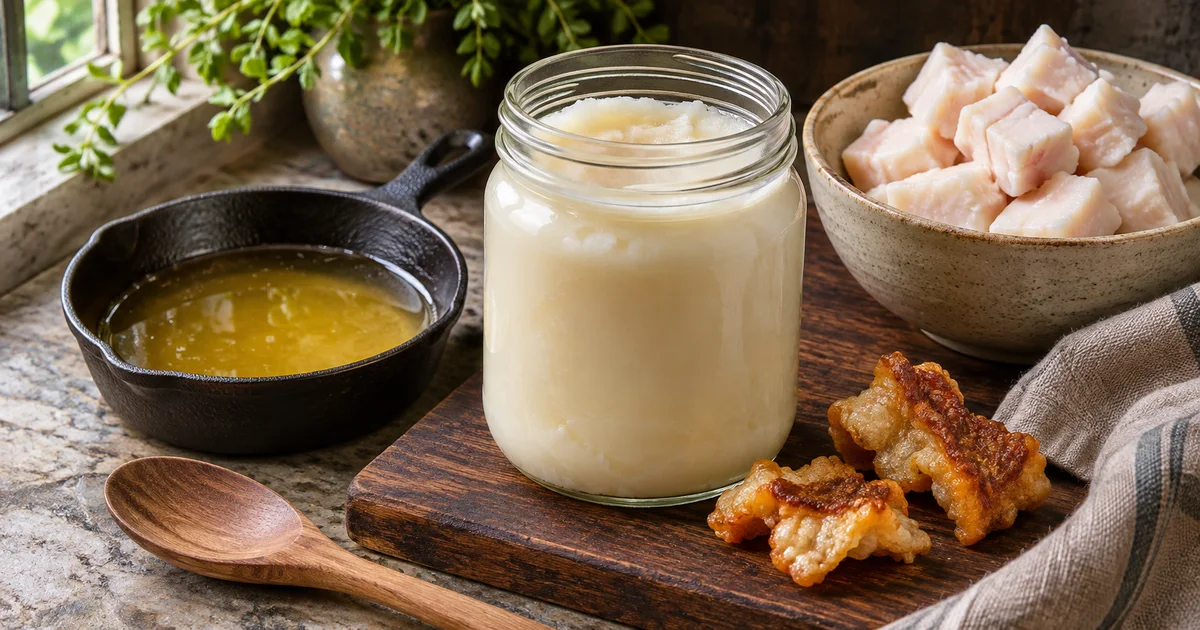
Beef fat becomes beef tallow when it is slowly melted, strained, and cooled. Homemade tallow is economical, naturally free of carbohydrates, and useful for searing steaks, roasting potatoes, frying, and making flaky savory pastry.
The key is gentle heat. Low, slow rendering separates clear fat from water, meat, and connective tissue without scorching it. The finished tallow should smell mild and beefy, look pale gold while warm, and turn creamy white as it cools.
Prep: 20 min · Cook: 3 hr · Total: 3 hr 20 min
Cuisine: American · Course: Condiment
How to Render Beef Fat into Tallow
Ingredients
Instructions
- Chill the beef fat for 30 minutes so it is firm but not frozen. Trim away every visible piece of meat, blood, and tough connective tissue.
- Cut the fat into 1/2-inch cubes. For faster rendering, pulse the cubes in a food processor in short bursts until coarsely ground; do not turn them into a paste.
- Put the fat and water in a heavy Dutch oven or deep saucepan. Set over the lowest heat and cook uncovered until the water begins to steam and the fat starts to melt, about 20 minutes.
- Continue rendering gently for 2 to 3 hours, stirring every 20 to 30 minutes. Keep the heat low enough that the fat never smokes. It is ready when the liquid is clear and the solid cracklings are shrunken and lightly golden.
- Set a fine-mesh strainer lined with cheesecloth over a clean, dry, heatproof jar or bowl. Carefully strain the hot liquid fat; do not press dark sediment through the cloth.
- Let the tallow cool uncovered until no longer warm, then cover and refrigerate. It will turn opaque and creamy white as it firms.
Estimated per tablespoon: 115 calories · Protein 0 g · Fat 13 g · Carbs 0 g · Saturated fat 6 g
What Is Beef Fat?
Beef fat is the fatty tissue trimmed from cattle. It can come from around muscles, brisket, steaks, or internal organs. Once the fat is melted and separated from moisture and solids, it is called rendered beef fat or beef tallow.
Beef Fat vs. Suet vs. Tallow
- Beef fat trimmings: mixed fat cut from steaks, roasts, and brisket. They make flavorful, slightly softer tallow.
- Suet: the firm, clean fat surrounding the kidneys and loin. It is prized for a mild flavor and hard, smooth finish.
- Tallow: the purified cooking fat produced by rendering either trimmings or suet.
The Best Beef Fat for Rendering
Ask a butcher for clean beef suet or firm fat trimmings. Choose pale white or cream-colored fat with a fresh, neutral aroma. Trim away meat and connective tissue because they hold moisture, shorten storage life, and can give the tallow a strong flavor.
Why Add Water?
A small amount of water protects the fat from scorching before enough liquid tallow has melted to coat the pot. It evaporates during the long uncovered cook, so it does not remain in properly finished tallow. Do not add water to the storage jar.
Three Ways to Render Beef Fat
Stovetop
The stovetop method in the recipe is the easiest to monitor. Use the smallest burner on its lowest setting and stir more often near the end.
Oven
Put the chopped fat and 1/4 cup water in a Dutch oven. Bake uncovered at 250°F for 3 to 4 hours, stirring once each hour, until the solids are golden and the liquid fat is clear.
Slow Cooker
Cook the chopped fat and water on LOW for 4 to 6 hours with the lid slightly ajar so steam can escape. Strain as soon as the cracklings are golden; very dark solids can make the tallow bitter.
How to Tell When Tallow Is Ready
- The bubbling has slowed because most moisture is gone.
- The liquid fat looks clear rather than cloudy.
- The solid pieces have shrunk and become lightly golden.
- The aroma is clean and gently beefy, never smoky or burned.
How to Strain Tallow
Use a dry, heatproof container and a fine-mesh strainer lined with cheesecloth or an unbleached coffee filter. Let the hottest fat cool for a few minutes before pouring, but strain while it is still fully liquid. A second strain gives especially smooth tallow.
Storage
Cool the strained fat before covering to avoid trapping condensation. Store homemade tallow in a clean, dry jar in the refrigerator for up to 3 months, or freeze in small portions for up to 1 year. Use a clean, dry spoon each time. Discard it if you notice mold, a sour or paint-like odor, or an unusually bitter taste.
Before rendering, keep raw beef fat refrigerated and use it promptly or freeze it. USDA guidance notes that refrigeration slows but does not stop bacterial growth.
Ways to Use Beef Tallow
- Sear steaks, burgers, and chops.
- Roast potatoes, carrots, onions, or Brussels sprouts.
- Fry French fries, hash browns, or eggs.
- Grease cast-iron pans and griddles before cooking.
- Replace part of the butter or shortening in savory biscuits and pie crust.
- Add a spoonful to lean ground beef for richer flavor.
What to Do with the Cracklings
Drain the browned solids on paper towels and season lightly with salt. Eat them warm as a crisp garnish for salads, potatoes, beans, or soups. Refrigerate leftover cracklings and use them within 3 to 4 days.
Troubleshooting
Why is my tallow yellow?
Warm tallow is naturally golden, and grass-fed beef fat can remain slightly yellow after cooling because of carotenoids. A pale yellow tint is not a problem if the aroma is fresh.
Why is it grainy?
Graininess usually comes from the way the fat crystallized while cooling. It is safe to use. For a smoother texture, remelt gently, strain again, and cool at room temperature before refrigerating.
Why does it smell strong?
Meat left on the trimmings, heat that was too high, or old fat can create a strong aroma. Start with very fresh fat, trim carefully, and keep the rendering temperature low.
Frequently Asked Questions
Can I render fat trimmed from steaks?
Yes. Freeze the trimmings until you have enough, then thaw them in the refrigerator and trim away meat before rendering.
Can I mix suet and other beef fat?
Yes. Suet makes the batch firmer and milder, while steak or brisket trimmings add a more pronounced roasted-beef flavor.
Does beef tallow need refrigeration?
Commercial tallow may be shelf stable, but homemade tallow can retain tiny amounts of water or solids. Refrigeration is the simplest, safest choice and preserves flavor.
Can I reuse beef tallow after frying?
Yes, if it was not overheated. Cool it slightly, strain out every food particle, refrigerate, and discard it if it becomes very dark, sticky, foamy, or develops an off odor.
Is beef tallow the same as lard?
No. Tallow is rendered beef fat; lard is rendered pork fat. Tallow is firmer and generally has a more pronounced savory flavor.
Nutrition Note
Beef tallow is nearly pure fat. The estimate in this recipe is based on the USDA FoodData Central entry for beef tallow and will vary slightly with the source fat and tablespoon size.
Sources
- USDA FoodData Central: Fat, beef tallow
- USDA FSIS: Refrigerating meat safely
- USDA FSIS: Cooking guidance for rendered lard and tallow
Prepared with AI assistance. Ingredient amounts and directions were developed and edited into an original recipe. Nutrition is an estimate.
Featured image: AI-generated food photography.