
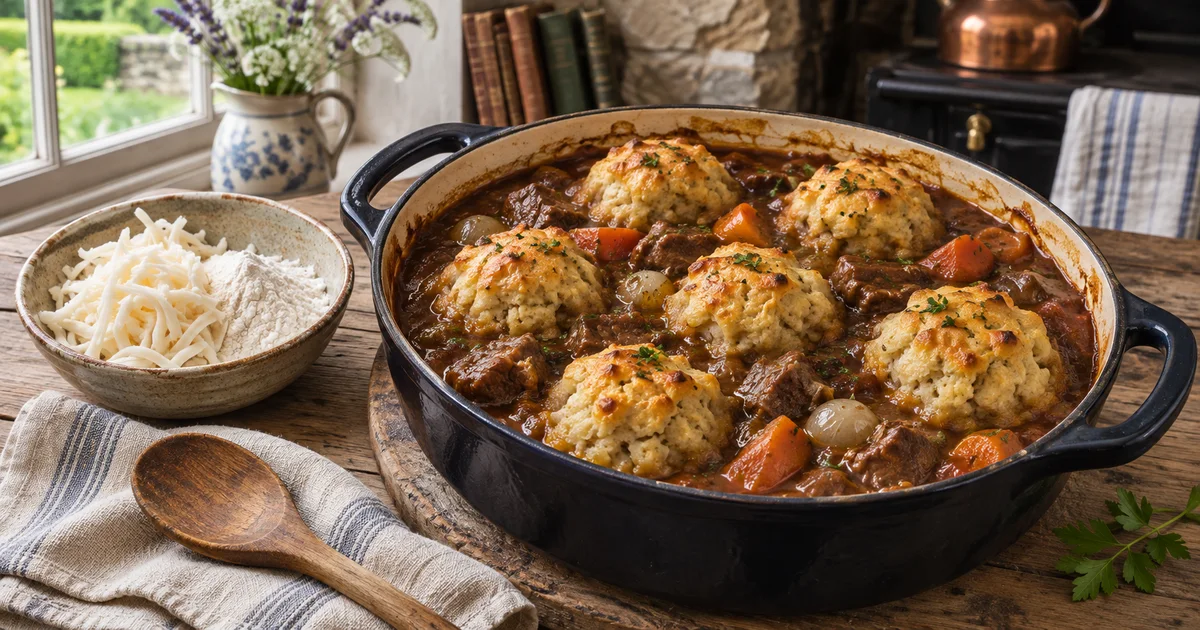
Beef suet is the firm, white fat found around a cow’s kidneys and loin. Its high melting point gives traditional dumplings a light, open texture and makes it valuable for British puddings, mincemeat, pastry, and homemade beef tallow.
This simple suet dumpling recipe produces eight fluffy, savory dumplings that steam directly on top of beef stew. Keep the suet and water cold, mix only until the dough comes together, and leave the lid closed while they cook.
Prep: 15 min · Cook: 25 min · Total: 40 min
Cuisine: British · Course: Side Dish
Traditional Beef Suet Dumplings
Ingredients
Instructions
- Bring the beef stew to a gentle simmer in a wide pot or Dutch oven. Keep it hot while you mix the dumplings.
- Stir the self-rising flour, shredded suet, salt, and parsley together in a medium bowl. Use your fingertips to separate any clumps of suet and coat them with flour.
- Pour in 1/2 cup cold water and stir with a fork just until a soft, slightly tacky dough forms. Add more water 1 tablespoon at a time only if dry flour remains. Do not knead.
- With lightly floured hands, divide the dough into 8 equal pieces and roll each gently into a ball.
- Arrange the dumplings on top of the simmering stew with a little space between them. Cover tightly and cook over low heat for 20 minutes without lifting the lid.
- Uncover and check that the dumplings are puffed and dry in the center. For golden tops, transfer the uncovered oven-safe pot to a 425°F oven for 5 to 8 minutes. Serve immediately with the stew.
Estimated per dumpling, without stew: 170 calories · Protein 3 g · Fat 9 g · Carbs 20 g · Sodium 250 mg
What Is Beef Suet?
Suet is a specific type of hard beef fat that surrounds the kidneys and extends along the loin. Fresh suet is pale, dry, crumbly, and mild smelling. It differs from the softer fat trimmed from brisket or steaks, which contains more connective tissue and melts at a lower temperature.
Beef Suet vs. Beef Fat vs. Tallow
- Beef suet: raw, firm internal fat from around the kidneys and loin.
- Beef fat trimmings: softer raw fat collected from steaks, roasts, and brisket.
- Beef tallow: purified fat made by slowly rendering suet or other clean beef fat.
If you want a clear cooking fat rather than dumplings, follow our guide to rendering beef fat into tallow.
Why Suet Makes Light Dumplings
Small pieces of cold suet remain solid while the dough is mixed. In the hot stew they slowly melt, leaving tiny pockets that help the dumplings become tender and airy. Regular butter melts sooner and contains water, so it gives a different texture.
How to Prepare Fresh Beef Suet
- Keep the suet cold so it stays firm and easy to handle.
- Pull away the thin membrane and trim off every visible piece of meat or blood.
- Cut the suet into small cubes, then grate it on the large holes of a box grater or pulse briefly in a food processor.
- Toss the shredded suet with a spoonful of flour if it begins to stick together.
Where to Buy Beef Suet
Ask the meat counter or a local butcher for beef kidney suet, not ordinary steak trimmings. It may be available fresh, frozen, or already shredded. Some supermarkets also carry shelf-stable vegetable suet in the baking aisle, but that is a substitute rather than beef suet.
Tips for Perfect Suet Dumplings
- Use very cold suet and cold water.
- Measure flour by weight when possible.
- Mix gently and stop as soon as no dry flour remains.
- Keep the stew at a gentle simmer rather than a hard boil.
- Leave room between the balls because they expand.
- Do not lift the lid during the first 20 minutes.
Cooking Methods
Soft Steamed Dumplings
Cover the pot and simmer for 20 to 25 minutes. The moist heat creates very soft dumplings that absorb the flavor of the stew.
Golden-Topped Dumplings
After steaming for 20 minutes, uncover an oven-safe pot and bake at 425°F for 5 to 8 minutes. The centers stay fluffy while the tops become lightly crisp.
Oven-Only Method
Place the dumplings on hot stew in an oven-safe casserole. Cover and bake at 375°F for 20 minutes, then uncover and bake for 10 minutes more.
Flavor Variations
- Add 1 teaspoon dried thyme, rosemary, or sage.
- Stir in 1 tablespoon chopped parsley or chives.
- Add 1/2 teaspoon mustard powder for extra savoriness.
- Mix in 2 tablespoons finely grated sharp cheddar.
- Add freshly ground black pepper or a pinch of garlic powder.
Other Uses for Beef Suet
Beyond dumplings, suet is traditionally used in steamed puddings, mincemeat, Christmas pudding, savory pastry, and suet crust. It can also be rendered into hard, clean tallow for frying, roasting, and searing.
Substitutes for Beef Suet
For dumplings, chilled grated butter or vegetable shortening can work in the same weight, but the texture and flavor will differ. Commercial vegetable suet is the closest direct substitute. Do not use liquid oil because it cannot create the same pockets in the dough.
Storage and Freezing
Fresh suet is perishable. Keep it tightly wrapped at 40°F or below and use it within 1 to 2 days, or freeze it promptly. For convenient portions, grate the cold suet, spread it on a tray to freeze, then transfer it to a freezer bag. Frozen suet keeps its best quality for several months.
Cooked dumplings are best fresh, but leftovers may be refrigerated with the stew for 3 to 4 days and reheated gently until steaming hot. USDA notes that refrigeration slows but does not stop bacterial growth.
Frequently Asked Questions
Is beef suet the same as lard?
No. Beef suet is raw internal fat from cattle. Lard is rendered pork fat.
Can I eat beef suet raw?
Suet is intended to be thoroughly cooked or rendered. Do not taste the raw fat or raw dumpling dough.
Can I make dumplings without self-rising flour?
Yes. For every 1 1/2 cups all-purpose flour, whisk in 2 1/4 teaspoons baking powder and 1/2 teaspoon fine salt before adding the suet.
Why are my dumplings heavy?
The dough was likely overmixed, too dry, or cooked at a hard boil. Use enough water for a soft dough, handle it minimally, and simmer gently.
Can I prepare the dumplings ahead?
You can mix and shape them up to 2 hours ahead. Arrange on a floured plate, cover, and refrigerate. Add them to the simmering stew directly from the refrigerator.
Does beef suet have a strong taste?
Fresh kidney suet is relatively mild. A sour or strongly rancid odor means it should be discarded.
Sources
- USDA FoodData Central
- USDA FSIS: Refrigerating meat safely
- USDA FSIS: Suggested storage times for beef
Prepared with AI assistance. Ingredient amounts and directions were developed and edited into an original recipe. Nutrition is an estimate.
Featured image: AI-generated food photography.