
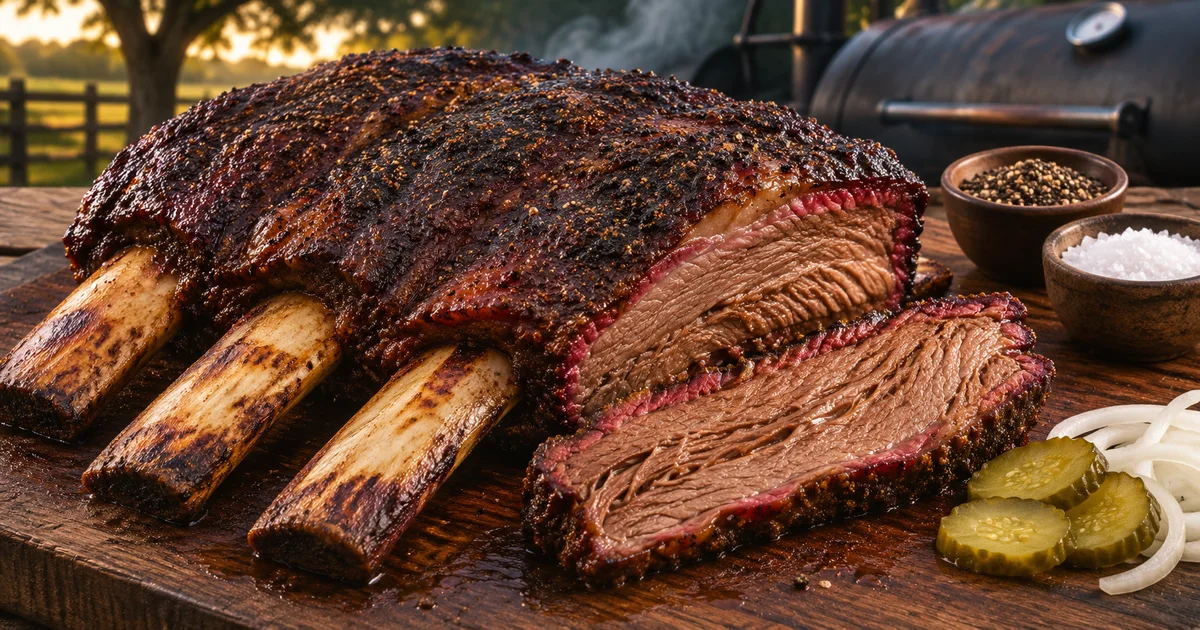
Dino beef ribs are the dramatic three-bone plate ribs seen at Texas barbecue joints. Each bone carries a thick layer of richly marbled meat that becomes tender and brisket-like after hours of clean smoke.
This recipe keeps the seasoning simple—salt, coarse black pepper, garlic, and a little onion—so the beef and smoke remain the focus. The ribs cook at 250°F until the bark is dark and a probe slides through the meat with almost no resistance.
Prep: 25 min · Dry brine: 4 hr · Smoke: 8 hr · Rest: 1 hr · Total: 13 hr
Cuisine: American · Course: Dinner
Texas-Style Smoked Dino Beef Ribs
Ingredients
Instructions
- Trim away loose flaps and any thick, hard surface fat, leaving about 1/4 inch of softer fat. Leave the membrane on the bone side so the rack stays together. Pat the ribs dry.
- Coat the meat side and edges lightly with Worcestershire sauce. Mix the salt, pepper, granulated garlic, and onion powder, then press the seasoning generously over every meaty surface. Refrigerate uncovered for 4 to 12 hours if time allows.
- Heat a smoker to 250°F with clean-burning oak, hickory, or pecan smoke. Place the rack bone-side down with the thicker end toward the hotter area. Insert a probe into the thickest meat without touching bone.
- Smoke without opening the lid for 3 hours. When the bark is dark and set, check every hour. If the surface looks dry, mist lightly with the beef stock and vinegar mixture; do not wash off the seasoning.
- Continue smoking until the internal temperature reaches about 170 to 175°F, usually 5 to 6 hours total. For softer bark and a faster finish, wrap tightly in unwaxed butcher paper. For firmer bark, leave the rack unwrapped.
- Cook until the thickest section reaches about 200 to 205°F and a thermometer probe slides between the bones with very little resistance, about 7 to 9 hours total. Tenderness, not the exact number, is the final test.
- Rest the ribs, still wrapped if applicable, in a dry cooler or turned-off warm oven for at least 1 hour and up to 2 hours. Keep them above 140°F during an extended hold.
- Slice between the bones into three large ribs, then cut each rib into smaller portions if desired. Serve with pickles, sliced onions, and barbecue sauce on the side.
Estimated per serving: 750 calories · Protein 56 g · Fat 56 g · Carbs 3 g · Sodium 900 mg
What Are Dino Beef Ribs?
Dino ribs are large plate short ribs cut from the lower rib section, usually bones 6 through 8. Butchers may label them beef plate ribs, short plate ribs, 3-bone ribs, or NAMP 123A. They are different from thin flanken-style ribs and smaller back ribs.
Plate Ribs vs. Chuck Ribs vs. Back Ribs
- Plate short ribs: three long bones with the thickest meat; the classic “dino rib.”
- Chuck short ribs: usually four bones, slightly smaller, still excellent for smoking.
- Beef back ribs: bones left after ribeye is removed; less meat on top and faster cooking.
Why This Recipe Works
- Simple rub: coarse pepper builds bark while salt penetrates the thick meat.
- 250°F smoker: renders fat steadily without stretching the cook excessively.
- Bone-side down: shields the meat from direct heat.
- Optional wrap: lets you choose between firm bark and a faster, softer finish.
- Long rest: allows the rendered fat and juices to settle before slicing.
How to Buy Beef Plate Ribs
Ask for an uncut three-bone short plate, preferably labeled 123A. Choose a rack with even thickness, visible marbling, and no deep gouges from trimming. A 6- to 8-pound rack comfortably feeds about six people after bone and fat loss.
Should You Remove the Membrane?
Unlike pork ribs, the tough membrane on the bone side of plate ribs helps hold the heavy meat to the bones during a long cook. Leave it in place. Trim only loose edges and thick, waxy fat that will not render.
Smoker and Meat Temperatures
USDA advises using one thermometer for the food and another for the smoker, keeping the smoker between 225°F and 300°F. Beef roasts are safe at a minimum of 145°F followed by a 3-minute rest, but plate ribs remain tough at that point. They normally become barbecue-tender around 200 to 205°F; use probe tenderness as the final test.
What Is the Stall?
Large ribs may pause around 160 to 175°F as surface moisture evaporates and cools the meat. The stall is normal. Leave the rack unwrapped for stronger bark, or wrap it in butcher paper once the bark is set to reduce evaporation and shorten the finish.
Wrap or No Wrap?
- No wrap: darkest, firmest bark and the longest cook.
- Butcher paper: preserves much of the bark while speeding the cook.
- Foil: fastest and juiciest, but the trapped steam softens the bark.
Best Wood for Beef Ribs
Post oak is the classic Texas choice. Hickory is stronger, pecan is slightly sweeter, and cherry adds color. Use seasoned wood and thin, nearly invisible blue smoke; heavy white smoke can make the bark bitter.
Oven Method
Heat the oven to 325°F. Season the ribs and place them bone-side down on a rack in a covered roasting pan. Roast until the bark-like crust is set, then cover tightly with foil and continue until the meat reaches roughly 200 to 205°F and probes tender, about 4 to 5 1/2 hours total. Uncover for the last 20 minutes to firm the surface.
Covered-Grill Method
Set up a charcoal grill for indirect cooking with a water pan between two small coal piles. Keep the vents open and maintain 225 to 300°F. Add a few wood chunks and replenish charcoal as necessary. Cook the ribs over the water pan, never directly over the coals.
Serving Ideas
Serve each rib whole for a dramatic presentation or slice the meat from the bone into portions. Classic sides include pickles, raw onion, white bread, coleslaw, potato salad, beans, and mac and cheese. Use sauce sparingly so the bark stays crisp.
Storage and Reheating
Refrigerate smoked ribs within 2 hours. Divide the meat into shallow containers and use within 4 days, or freeze tightly wrapped for up to 3 months. Reheat covered at 275°F with a splash of beef stock until the center reaches 165°F.
Frequently Asked Questions
How long do dino ribs take at 250°F?
A 6- to 8-pound rack usually needs 7 to 9 hours plus at least 1 hour of rest. Thickness, marbling, weather, and smoker airflow matter more than weight alone.
Do I need to spritz the ribs?
No. Spritz only when the surface looks dry after the bark has set. Opening the smoker too often lengthens the cook and can soften the bark.
Why are my beef ribs tough?
They likely need more time. Continue cooking until a probe slips between the bones with little resistance. A high internal temperature alone does not guarantee that the collagen has softened.
Can I season the ribs overnight?
Yes. Salt and season the rack, then refrigerate it uncovered for up to 24 hours. This dry brine improves seasoning and helps dry the surface for stronger bark.
Can I cook individual ribs?
Yes, but exposed sides lose moisture faster. Begin checking after 5 hours and consider wrapping once the bark sets.
Is the pink smoke ring undercooked meat?
No. Smoke can create a pink ring even when meat is fully cooked. Color is not a reliable doneness test; use a food thermometer and probe tenderness.
More Beef Guides
Build a bolder crust with our brisket rub, learn how rendered beef fat works, or compare the technique with sliced beef brisket.
Sources
- USDA FSIS: Thermometers for Smoking Meat
- USDA FSIS: Safe Internal Temperature for Meat
- USDA FSIS: Refrigerating Smoked Meat
Prepared with AI assistance. Ingredient amounts and directions were developed and edited into an original recipe. Nutrition is an estimate.
Featured image: AI-generated food photography.