
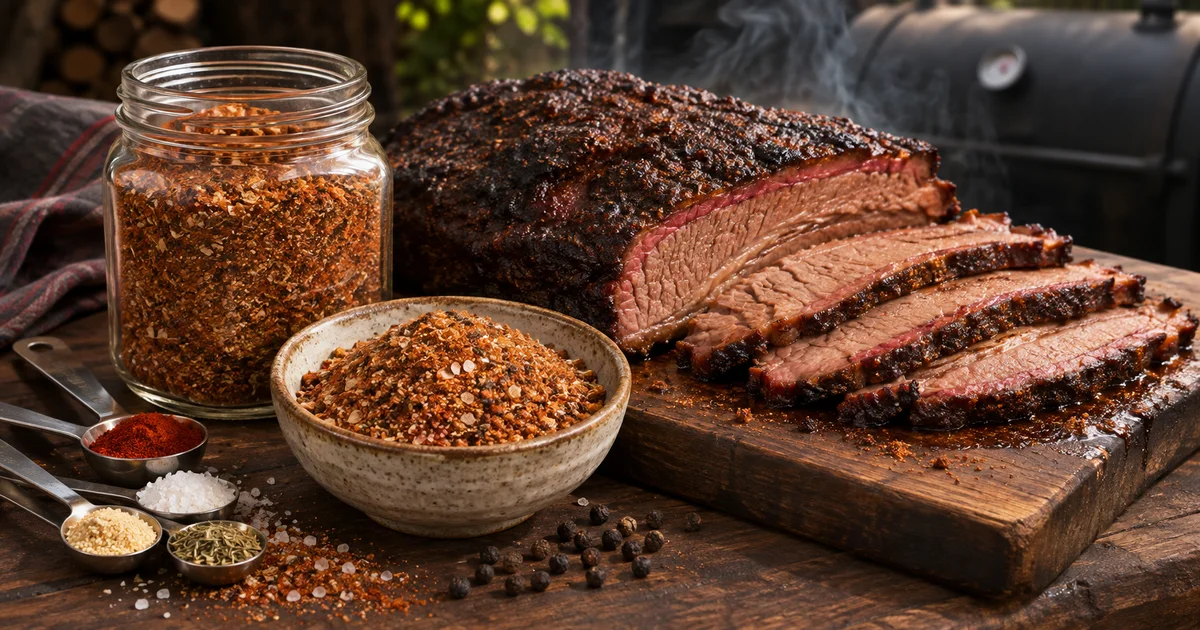
A great brisket rub should season a thick cut of beef deeply while helping it form a dark, flavorful bark. This homemade blend starts with the Texas essentials—coarse black pepper and kosher salt—then adds smoked paprika, garlic, onion, mustard, and gentle heat.
The recipe makes about 3/4 cup, enough for one full 12- to 14-pound packer brisket. Use it for smoked, grilled, slow-cooked, or oven-baked brisket.
Prep: 10 min · Cook: 0 min · Total: 10 min
Cuisine: American · Course: Seasoning
Homemade Brisket Rub
Ingredients
Instructions
- Add the black pepper, kosher salt, smoked paprika, granulated garlic, onion powder, mustard powder, brown sugar, and cayenne to a medium bowl.
- Whisk thoroughly, breaking up every clump of brown sugar, until the color and texture are even.
- Pat the brisket dry and trim the fat cap to about 1/4 inch. If desired, spread on a very thin coat of yellow mustard, hot sauce, or Worcestershire sauce as a binder.
- Sprinkle the rub from 10 to 12 inches above the meat for even coverage, using about 1 tablespoon per pound. Coat the top, bottom, and edges, then press gently so the seasoning adheres; do not rub it off.
- Let the seasoned brisket stand for 30 to 45 minutes while the smoker or oven heats, or refrigerate it uncovered for up to 12 hours. If refrigerated, let it sit at room temperature only while the cooker preheats.
- Use immediately, or transfer unused rub that has not touched raw meat to an airtight jar and store in a cool, dark pantry for up to 6 months.
Estimated per tablespoon: 15 calories · Protein 0 g · Fat 0 g · Carbs 3 g · Sodium 950 mg
Why This Brisket Rub Works
- Coarse black pepper creates the classic texture and bite of barbecue bark.
- Kosher salt seasons the meat and helps it retain moisture.
- Smoked paprika deepens color and reinforces the smoke flavor.
- Garlic and onion add savory depth without overpowering the beef.
- Dry mustard gives gentle tang and complexity.
- Brown sugar rounds out bitterness, but it is optional for high-heat or Texas-style cooking.
How Much Rub per Pound of Brisket?
Use approximately 1 tablespoon of rub per pound of trimmed brisket. A 5-pound flat needs about 5 tablespoons; a 12- to 14-pound whole packer uses most or all of this recipe. The surface should look evenly covered, but the seasoning should not form a thick, pasty layer.
How to Apply Brisket Rub
- Trim hard exterior fat and leave a roughly 1/4-inch fat cap.
- Pat every surface dry with paper towels.
- Apply an optional binder in the thinnest possible coat.
- Shake the seasoning evenly over the brisket from about one foot above it.
- Press the rub into the meat with an open palm instead of scrubbing.
- Season the edges and any exposed seams between the point and flat.
Do You Need a Binder?
No. Salt and spices will adhere to a slightly damp brisket without help. A thin binder of yellow mustard, hot sauce, Worcestershire sauce, or neutral oil can make application easier, especially on a very dry surface. The binder flavor is usually subtle after a long cook.
How Long Should Rub Sit on Brisket?
For good bark, let the seasoned brisket rest for 30 to 45 minutes while the cooker heats. For deeper seasoning, refrigerate it uncovered for 8 to 12 hours. Keep raw brisket refrigerated while it rests for longer than the normal preheating period; never marinate meat on the counter.
Texas-Style Brisket Rub
For a traditional Central Texas profile, use equal parts coarse black pepper and kosher salt and omit every other ingredient. Add 1 tablespoon granulated garlic if you prefer a slightly more savory variation while keeping the rub sugar-free.
No-Sugar Brisket Rub
Simply leave out the brown sugar. This is the best choice when cooking at higher temperatures because sugar can darken quickly. The pepper, paprika, and garlic still produce excellent bark.
Spicy Brisket Rub
Increase cayenne to 2 teaspoons and add 1 teaspoon ancho chile powder or crushed red pepper. For a smoky heat, replace half the smoked paprika with chipotle powder.
Sweet Barbecue Variation
Increase brown sugar to 1/4 cup and add 1 teaspoon ground cumin. Use this sweeter blend at 250–275°F, where the sugar can caramelize slowly without scorching.
Smoker Instructions
Season the brisket and smoke it at 225–275°F according to your preferred method. The minimum safe temperature for a whole beef roast is 145°F with a 3-minute rest, but collagen-rich brisket is normally cooked much further—often to about 195–205°F—until a probe slides into the flat with very little resistance. Tenderness, not one exact finishing number, determines when it is ready.
Oven Instructions
Heat the oven to at least 325°F. Place the seasoned brisket fat-side up in a roasting pan, add a small amount of broth or water, cover tightly, and cook until tender. Uncover near the end if you want a firmer crust. See our complete sliced beef brisket recipe for timing and gravy.
Common Mistakes
- Using fine pepper, which can taste dusty and overly sharp.
- Measuring different brands of kosher salt as though they have the same density.
- Applying a thick binder that turns the rub into paste.
- Rubbing aggressively and wiping seasoning off the meat.
- Adding a sweet rub before cooking over very high direct heat.
- Slicing brisket immediately instead of allowing it to rest.
Storage
Store unused rub in an airtight jar in a cool, dark pantry for up to 6 months. Shake before using. For the best aroma, replace it if the paprika fades or the mixture smells flat. Discard any seasoning that contacted raw meat or a utensil used on raw brisket.
Frequently Asked Questions
Should brisket rub contain sugar?
It is optional. Sugar adds balance and caramelization, but many Texas-style rubs use only salt and pepper. Omit sugar for higher-temperature cooks.
Can I use table salt?
It is not ideal because its fine crystals pack more densely and can make the rub too salty. If necessary, reduce the amount substantially and season by weight or taste.
Can I use this rub on other meats?
Yes. It works on beef ribs, chuck roast, tri-tip, burgers, pork shoulder, and grilled chicken. Use less on thinner cuts.
Should I oil brisket before seasoning?
You can, but it is not required. A very thin coating helps the rub adhere; too much oil can soften the bark.
Can I make the rub ahead?
Yes. Mix it several months ahead, store airtight away from heat and sunlight, and add brown sugar only after breaking up any clumps.
Is smoked paprika necessary when using a smoker?
No. Regular sweet paprika provides color without adding another layer of smoke. Either type works.
Food Safety
FoodSafety.gov lists 145°F with a 3-minute rest as the safe minimum for beef roasts. Brisket is generally cooked to a higher temperature for tenderness. Refrigerate cooked brisket within 2 hours and use refrigerated leftovers within 3 to 4 days.
Sources
- FoodSafety.gov: Safe Minimum Internal Temperatures
- FoodSafety.gov: Meat and Poultry Roasting Charts
- USDA FSIS: Handling leftovers safely
Prepared with AI assistance. Ingredient amounts and directions were developed and edited into an original recipe. Nutrition is an estimate.
Featured image: AI-generated food photography.