
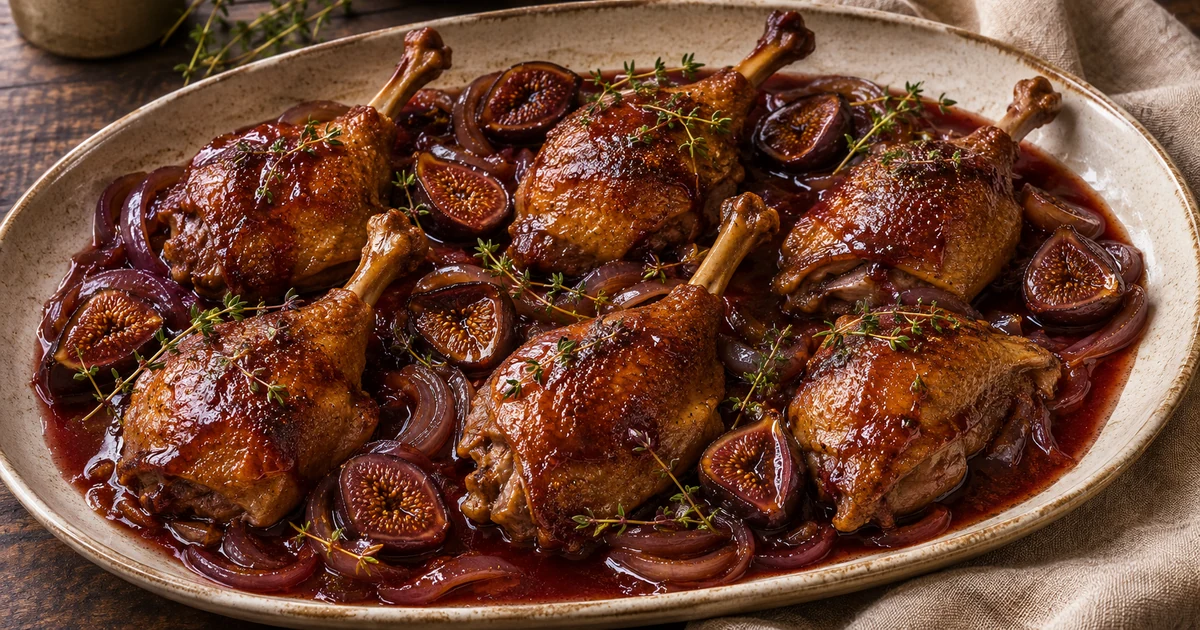
Braised duck with figs and port is an elegant dinner built on a beautiful contrast: savory, tender duck; jammy figs; and a glossy wine sauce with berry-like depth.
The slow cooker handles the gentle braise while a quick skillet sear builds the flavor. Reducing the cooking liquid at the end turns it into a restaurant-style sauce.
Prep: 15 min · Cook: 6 hr · Total: 6 hr 15 min
Cuisine: French-inspired · Course: Dinner
Braised Duck Legs with Figs and Port
Ingredients
Instructions
- Pat the duck legs dry and prick the skin several times without piercing the meat. Season all over with 1 teaspoon salt and ½ teaspoon pepper.
- Heat the olive oil and butter in a large skillet over medium heat. Add the onion and cook for 4 minutes. Add the garlic for 30 seconds, then transfer both to a 6-quart slow cooker.
- Place the duck legs skin-side down in the skillet and brown for 6 to 8 minutes, pouring off excess rendered fat as needed. Turn and brown the second side for 3 minutes. Arrange skin-side up in the slow cooker.
- Pour the port, broth, and balsamic vinegar into the skillet. Scrape up the browned bits and simmer for 3 minutes. Pour over the duck and add the thyme and figs around, not over, the skin.
- Cover and cook on low for 6 to 7 hours or on high for 3 to 3½ hours, until the duck is tender and reaches at least 165°F (74°C).
- Transfer the duck and figs to a platter and discard the thyme stems. Skim the fat from the liquid. Simmer the sauce in a saucepan for 8 to 12 minutes; for a thicker sauce, whisk in the cornstarch mixed with cold water. Adjust salt and pepper, spoon the sauce around the duck, and garnish with thyme.
Estimated per serving: 610 calories · Protein 34 g · Fat 35 g · Carbs 35 g · Fiber 5 g · Sodium 610 mg
Why This Recipe Works
- Pricked and browned skin: rendering before braising prevents the sauce from becoming excessively greasy.
- Ruby port: fruity sweetness complements the duck and dried figs.
- Balsamic balance: a little acidity keeps the sauce lively rather than syrupy.
- Figs around the duck: placing them beside the legs keeps the skin from being covered with moisture.
- Reduced sauce: a final boil concentrates flavor and gives the liquid a glossy finish.
Choosing Duck Legs
Look for plump legs with intact skin and a fresh, clean aroma. Pekin duck is widely available and moderately rich; Muscovy duck is leaner and meatier. Six legs typically weigh about four pounds, but size varies, so cook until tender rather than relying only on time.
Ingredient Notes
Port wine
Ruby port has bright berry and plum flavors that suit figs. Tawny port can be used for a nuttier sauce. Avoid very old or expensive vintage port—the subtlety is unnecessary for cooking.
Dried figs
Black Mission figs give the sauce a deep color and jammy sweetness. Calimyrna figs are lighter and honeyed. Remove tough stems and halve the fruit so it softens evenly.
Duck fat
Duck releases a generous amount of flavorful fat. Pour rendered fat from the skillet into a heat-safe jar, strain it, and refrigerate it for roasting potatoes or vegetables.
Fresh thyme
Whole sprigs perfume the braise and are easy to remove. Rosemary is stronger but can substitute; use one small sprig.
How to Get Crisp Duck Skin
Slow-cooker moisture softens skin. After braising, pat the skin dry, place the legs on a foil-lined baking sheet, and broil for 2 to 4 minutes. Watch continuously because the sugar-rich surface can brown quickly.
How to Balance the Port Sauce
Taste only after skimming and reducing. If the sauce is too sweet, add balsamic vinegar ½ teaspoon at a time. If too sharp, add a small spoonful of fig preserves. If too intense, loosen it with chicken broth.
What to Serve with Braised Duck
Creamy polenta, mashed potatoes, celery-root purée, or wild rice absorb the sauce beautifully. Add roasted Brussels sprouts, green beans, or a bitter-leaf salad for freshness.
Variations
- Fresh figs: add quartered fresh figs during the final 20 minutes.
- Orange: add two wide strips of orange zest with the thyme.
- Spiced: add one star anise pod or a small cinnamon stick.
- Red wine: replace port with dry red wine and add 2 tablespoons fig preserves.
- Shallots: substitute three sliced shallots for the onion.
Storage and Reheating
Cool promptly and refrigerate the duck, figs, and sauce for up to 3 days. The chilled fat will solidify on top and can be lifted away easily. Reheat covered at 325°F until the center reaches 165°F, then broil briefly to restore the skin.
Frequently Asked Questions
Can I use duck breasts?
Duck breasts are too lean for this long braise. Use legs for slow cooking and save breasts for quick pan-searing.
Can I make the dish ahead?
Yes. Braise one day ahead, chill in the sauce, remove the solidified fat, then reheat gently and crisp the skin before serving.
Does the alcohol cook out?
Much of it evaporates during skillet simmering and sauce reduction, but not necessarily all. Use the alcohol-free substitution when needed.
Why is my sauce greasy?
The duck fat was not skimmed thoroughly. Let the sauce settle, spoon off the clear fat, or use a fat separator.
Can I use fresh figs?
Yes, but add them near the end so they hold their shape.
What temperature should duck legs reach?
Duck is safe at 165°F, but legs become most tender when cooked beyond that point until the meat yields easily.
More Special-Occasion Dinners
Browse dinner recipes, or try Beef Bourguignon and Grass-Fed Ribeye Steak.
Prepared with AI assistance. The supplied cookbook page was used as inspiration; ingredient amounts, timing, directions, and explanatory text were independently developed and edited into an original recipe. Nutrition is an estimate.
Featured image: AI-generated food photography.