
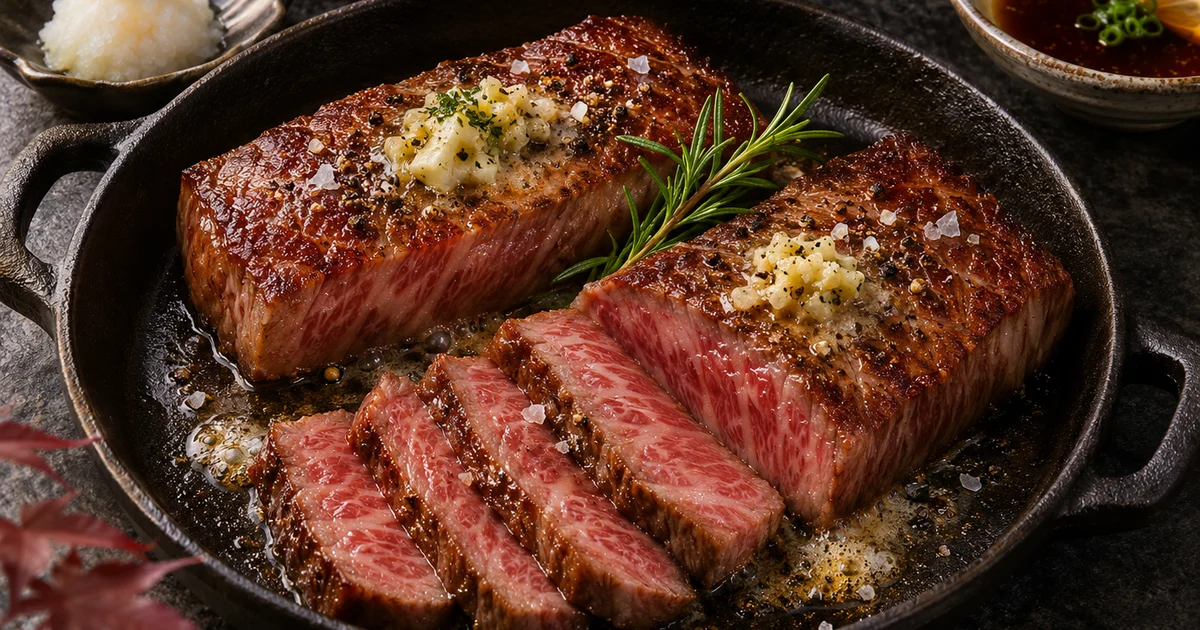
Zabuton is a richly marbled cut from the chuck flap, prized for its tenderness and deep beefy flavor. Its Japanese name means “cushion,” a nod to the cut’s compact, rectangular shape.
A ripping-hot cast-iron skillet builds a mahogany crust, while garlic-herb butter adds a glossy, savory finish. Keep the center medium-rare and slice across the grain for exceptionally juicy bites.
Prep: 10 min · Cook: 10 min · Rest: 5 min · Total: 25 min
Cuisine: Japanese-Inspired · Course: Dinner
Cast-Iron Zabuton Steak
Ingredients
Instructions
- Remove the steaks from the refrigerator 20–30 minutes before cooking. Pat them very dry with paper towels, then season all over with the kosher salt and black pepper.
- Heat a heavy cast-iron skillet over high heat until very hot. Add the neutral oil and swirl to coat the surface.
- Lay the steaks in the skillet and sear without moving for 2–3 minutes, until deeply browned. Flip and sear the second side for about 2 minutes.
- Lower the heat to medium. Add the butter, crushed garlic, and herbs. Tilt the skillet and spoon the foaming butter over the steaks continuously for 1–2 minutes.
- Transfer the steaks to a cutting board when the center reaches 125–130°F for medium-rare. Rest for 5 minutes; carryover cooking should bring them to about 130–135°F.
- Slice against the grain, sprinkle with flaky salt, and serve with ponzu sauce or lemon wedges if desired.
Estimated per serving: 520 calories · Protein 36 g · Fat 41 g · Carbs 1 g · Sodium 540 mg
What Is Zabuton Steak?
Zabuton is the chuck flap portion of the chuck roll. It is sometimes marketed as a Denver steak in the United States, although butcher specifications can vary. The cut has abundant fine marbling, a loose grain, and a rich flavor that suits fast, high-heat cooking.
Tips for the Best Zabuton Steak
- Dry the surface thoroughly so the steak sears instead of steaming.
- Use a cast-iron or other heavy skillet that holds intense heat.
- Do not move the steak during the first sear; let the crust develop.
- Add butter only after lowering the heat so the milk solids do not burn.
- Slice across the visible grain for the most tender bite.
Steak Temperature Guide
For rare, pull the steak at 120–125°F. For medium-rare, pull it at 125–130°F. For medium, pull it at 135–140°F. The temperature usually rises another 5°F as the meat rests.
Substitutions and Variations
If Zabuton is unavailable, use Denver steak, flat iron, ribeye, or New York strip. Swap rosemary for thyme, add a splash of soy sauce to the butter, or brush the sliced steak lightly with ponzu for a brighter Japanese-inspired finish.
Serving Ideas
Serve Zabuton steak with steamed rice, roasted mushrooms, grilled scallions, cucumber salad, or crisp potatoes. Ponzu, grated daikon, wasabi, and yuzu kosho all balance the richness of the meat.
Storage and Reheating
Refrigerate leftovers in an airtight container for up to three days. Reheat gently in a covered skillet over low heat, or serve thinly sliced at room temperature to avoid overcooking.
Frequently Asked Questions
Is Zabuton the same as Denver steak?
They come from the same chuck flap area and the names are often used interchangeably, but exact trimming and portioning can differ by butcher.
Why is Zabuton so marbled?
The cut contains fine intramuscular fat, especially in higher-grade Wagyu beef. That marbling melts during cooking and contributes tenderness, moisture, and flavor.
Can I grill Zabuton steak?
Yes. Grill over high direct heat for about 2–3 minutes per side, then move to a cooler zone until it reaches your preferred internal temperature.
Prepared with AI assistance. Ingredient amounts and directions were developed and edited into an original recipe. Nutrition is an estimate and varies by ingredients and portion size.
Featured image: AI-generated food photography.