
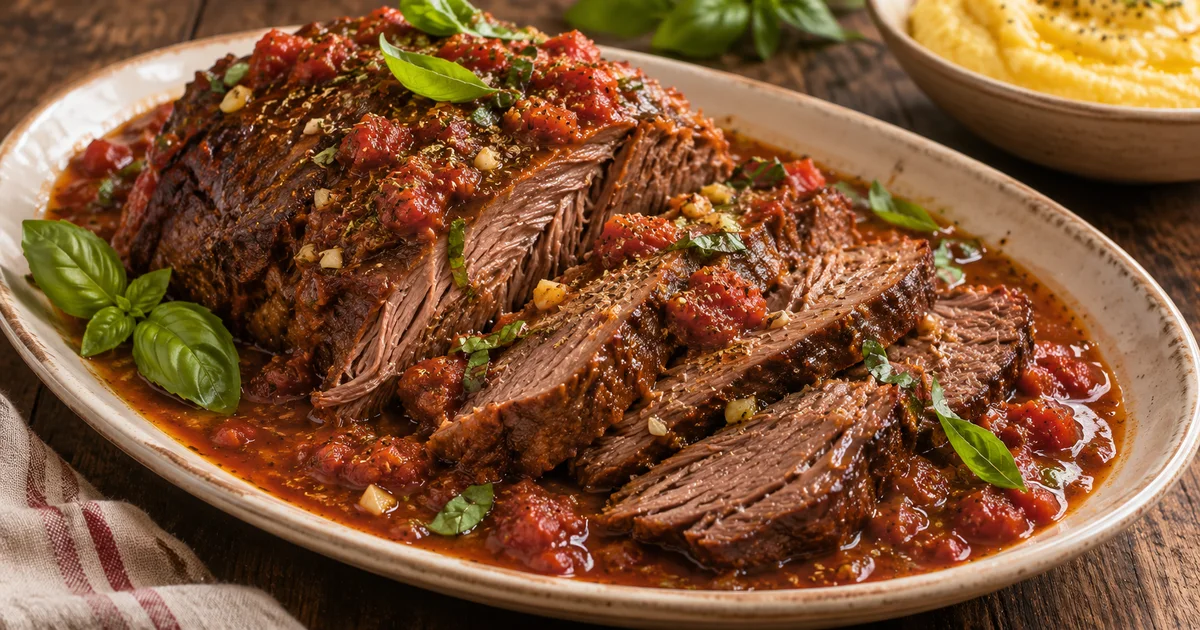
Slow cooker Italian pot roast turns an economical chuck roast into a deeply savory Sunday dinner. Tomatoes, red wine, garlic, oregano, and basil create a silky sauce that begs for creamy polenta or mashed potatoes.
Prep: 30 min · Cook: 8 hr · Total: 8 hr 30 min
Slow Cooker Italian Pot Roast
Ingredients
Instructions
- Pat the beef dry and season all over with salt and pepper. Dust lightly with flour and shake off the excess.
- Heat the olive oil in a large skillet over medium-high heat. Brown the roast deeply on every side, 10 to 12 minutes total, then transfer it to a 6-quart slow cooker.
- Reduce the heat to medium. Add the onion and cook for 4 minutes. Stir in the garlic and tomato paste; cook for 1 minute.
- Pour in the wine and scrape up the browned bits. Simmer for 3 minutes, then add the tomatoes, broth, balsamic vinegar, oregano, rosemary, red pepper flakes, bay leaves, and optional sugar. Bring to a gentle simmer.
- Pour the tomato mixture around the roast. Cover and cook on low for 7 to 8 hours or on high for 4 to 5 hours, until the beef is fork-tender.
- Transfer the roast to a board and rest for 15 minutes. Discard the bay leaves and skim excess fat from the sauce. Stir in most of the basil and parsley.
- Slice the beef across the grain or pull it into large pieces. Spoon the tomato-wine sauce over it, garnish with the remaining herbs, and serve with polenta or mashed potatoes.
Estimated per serving: 475 calories · Protein 45 g · Fat 25 g · Carbs 15 g · Fiber 3 g · Sodium 710 mg
Why This Recipe Works
- Chuck roast: marbling melts during the long braise for juicy, pull-apart beef.
- Deep browning: creates the savory base that makes the sauce taste slow-simmered.
- Wine and tomatoes: balance richness with acidity and natural sweetness.
- Fresh herbs at the end: keep the finished sauce bright and aromatic.
Choosing the Beef
Look for a chuck roast with even marbling and a fairly uniform thickness. Remove only large, hard exterior pieces of fat; the softer seams inside the roast help keep it tender.
Helpful Tips
- Dry the roast well so it browns instead of steaming.
- Let the wine simmer before it goes into the slow cooker.
- Keep the lid closed during cooking.
- Rest the roast before slicing, then cut across the grain.
Variations
- No wine: use beef broth plus extra balsamic vinegar.
- Vegetable-rich: add carrots and mushrooms during the final two hours.
- Spicy: increase the red pepper flakes.
- Olive finish: stir in sliced Kalamata olives before serving.
Serving Suggestions
Serve the roast and sauce over creamy polenta, mashed potatoes, risotto, buttered noodles, or alongside crusty Italian bread and a simple green salad.
Storage and Reheating
Refrigerate the beef in its sauce for up to 4 days. Reheat gently, covered, on the stove or in a 300°F oven. Freeze portions in sauce for up to 3 months.
Frequently Asked Questions
What cut of beef is best for Italian pot roast?
Boneless chuck roast is ideal because its marbling and connective tissue become tender during slow cooking.
Can I make Italian pot roast without wine?
Yes. Replace the wine with additional beef broth and add another teaspoon of balsamic vinegar for acidity.
Do I have to brown the roast first?
Browning is optional, but it adds a deep roasted flavor and gives the tomato sauce more complexity.
How do I know when pot roast is done?
The roast is ready when a fork twists easily in the meat and the fibers separate without resistance.
What should I serve with Italian pot roast?
Creamy polenta, mashed potatoes, buttered noodles, risotto, or crusty bread all work well with the tomato-wine sauce.
How long will leftovers keep?
Store the beef in its sauce in an airtight container for up to four days, or freeze for up to three months.
More Comfort-Food Dinners
Browse our dinner recipes, slow-cooker collection, and Italian recipes.
Prepared with AI assistance. The supplied cookbook page was used as inspiration; ingredient amounts, timing, directions, and explanatory text were independently developed and edited into an original recipe. Nutrition is an estimate.
Featured image: AI-generated food photography.