
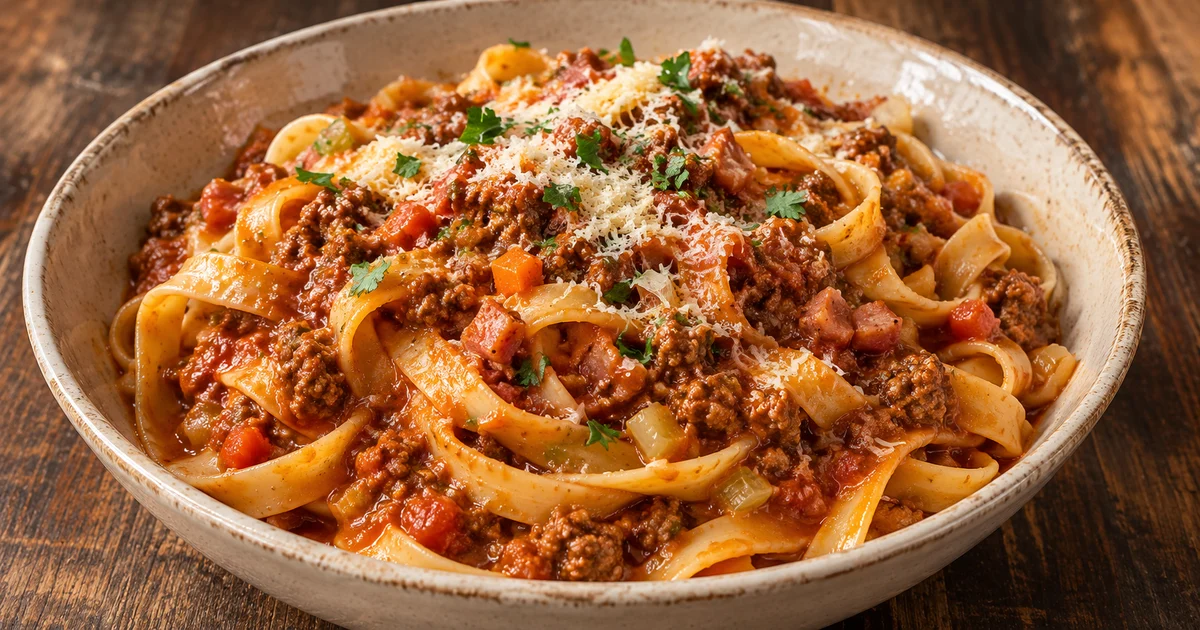
Slow cooker fettuccine Bolognese combines tender beef, pancetta, aromatic vegetables, tomatoes, and milk in a deeply savory ragù made for wide ribbons of pasta.
Prep: 30 min · Cook: 8 hr · Total: 8 hr 30 min
Slow Cooker Fettuccine Bolognese
Ingredients
Instructions
- Heat the olive oil in a large skillet over medium heat. Add the pancetta and cook for 4 to 5 minutes, until lightly crisp and its fat begins to render.
- Add the onion, carrots, and celery. Cook for 7 to 8 minutes, stirring often, until softened. Add the garlic and cook for 30 seconds.
- Increase the heat to medium-high. Add the beef, salt, and pepper, then cook for 7 to 9 minutes, breaking it into small crumbles, until no pink remains. Stir in the tomato paste and cook for 1 minute.
- Pour in the wine and scrape up the browned bits. Simmer for 3 to 4 minutes, until reduced by about half, then transfer everything to a 6-quart slow cooker.
- Add the broth, crushed tomatoes, bay leaf, oregano, and nutmeg. Cover and cook on LOW for 7 to 8 hours or HIGH for 3 to 4 hours.
- Discard the bay leaf. Stir in the milk and cook uncovered on HIGH for 20 to 30 minutes, until the sauce is silky and slightly thickened. Taste and adjust the seasoning.
- Cook the fettuccine in well-salted water until al dente. Reserve ½ cup pasta water, drain, and toss the pasta with enough Bolognese to coat, adding a splash of pasta water if needed. Finish with Parmesan and parsley or basil.
Estimated per serving: 640 calories · Protein 35 g · Fat 26 g · Carbs 65 g · Fiber 6 g · Sodium 720 mg
Why This Recipe Works
- Slow cooking: develops a deep, savory ragù with minimal hands-on work.
- Pancetta: adds gentle smokiness and rich pork flavor.
- Finely chopped vegetables: melt into the sauce and balance the beef.
- Milk at the end: smooths the tomatoes and makes the sauce silky.
Building a Better Bolognese
Take time to brown the beef and reduce the wine before transferring the mixture to the slow cooker. Those two steps create the roasted, concentrated flavor that distinguishes a rich ragù from an ordinary meat sauce.
Helpful Tips
- Chop the onion, carrots, and celery to a similar small size.
- Brown the beef in batches if your skillet is crowded.
- Cook the pasta just until al dente.
- Reserve pasta water to help the sauce cling to every ribbon.
Variations
- Beef and pork: replace half the beef with ground pork.
- Alcohol-free: use broth and a teaspoon of vinegar.
- Spicy: add ½ teaspoon crushed red pepper.
- Different pasta: serve with pappardelle, tagliatelle, or rigatoni.
Serving Suggestions
Serve with a crisp green salad, roasted broccoli, or garlic bread. Add Parmesan at the table and pair with sparkling water or a dry Italian red wine.
Storage and Reheating
Store the sauce separately from the pasta for up to 4 days. Reheat gently with a splash of broth. Freeze cooled sauce for up to 3 months.
Frequently Asked Questions
Why add milk to Bolognese sauce?
Milk softens the acidity of the tomatoes and gives the ragù a rounded, silky texture without making it taste creamy.
Can I make Bolognese without wine?
Yes. Replace the wine with additional beef broth and add one teaspoon of balsamic or red wine vinegar for depth.
What meat is best for Bolognese?
Ground beef with some fat produces a rich sauce. You can also use equal parts beef and pork for a softer texture and deeper flavor.
Can I cook the fettuccine in the slow cooker?
It is better to cook pasta separately. Fettuccine can become gummy in the slow cooker and it absorbs too much of the sauce during storage.
Can I make the sauce ahead?
Yes. The flavor improves after a night in the refrigerator. Reheat gently and loosen with broth or pasta water before serving.
How should I store or freeze leftovers?
Refrigerate sauce for up to four days or freeze it for up to three months. Freeze the sauce without the pasta for the best texture.
Prepared with AI assistance. The supplied cookbook page was used as inspiration; ingredient amounts, timing, directions, and explanatory text were independently developed and edited into an original recipe. Nutrition is an estimate.
Featured image: AI-generated food photography.