
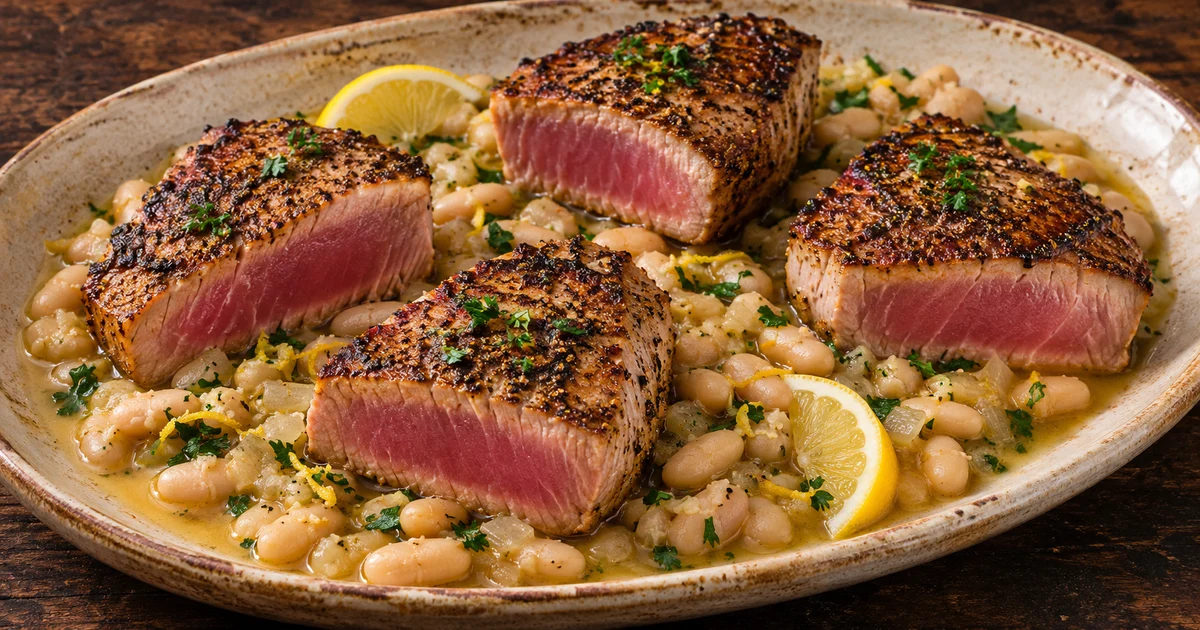
Seared tuna with white beans combines a deeply browned peppery crust, a rosy center, and creamy cannellini beans scented with garlic, lemon, and herbs. The beans cook gently while the tuna needs only minutes in a hot pan.
Prep: 25 min · Cook: 8 hr · Total: 8 hr 25 min
Seared Tuna with White Beans
Ingredients
Instructions
- Place the dried beans in a large bowl, cover with water by at least 3 inches, and soak overnight. Drain and rinse well.
- Heat 1 tablespoon olive oil in a skillet over medium heat. Cook the onion for 5 minutes. Add the garlic and cook for 30 seconds, then transfer to a 5- to 6-quart slow cooker.
- Add the beans, bay leaf, thyme, broth, 1 teaspoon salt, ½ teaspoon black pepper, and optional red pepper flakes. Cover and cook on low for 7 to 8 hours or on high for 3½ to 4½ hours, until creamy and tender.
- Remove the bay leaf. Stir in the lemon zest, lemon juice, parsley, basil, and remaining olive oil. Add a splash of broth if the beans seem dry. Taste and adjust the seasoning.
- Pat the tuna steaks very dry. Season both sides with coriander, smoked paprika, the remaining salt, and the remaining black pepper.
- Heat a heavy skillet over high heat until very hot. Add a thin film of oil and the optional butter. Sear the tuna for 1½ to 2 minutes per side for a rare center, or longer to your preferred doneness.
- Spoon the warm beans onto four plates. Slice or leave the tuna whole and place it over the beans. Finish with olive oil and lemon wedges.
Estimated per serving: 610 calories · Protein 55 g · Fat 15 g · Carbs 67 g · Fiber 17 g · Sodium 680 mg
Why This Recipe Works
- Slow-cooked beans: become creamy without losing their shape.
- Very hot skillet: creates a dark crust before the tuna overcooks.
- Lemon and herbs: lift the earthy beans and rich fish.
- Separate cooking: lets each component reach its ideal texture.
Choosing Tuna Steaks
Look for evenly cut steaks with firm, moist flesh and a clean scent. For a rare center, buy tuna from a trusted fishmonger and explain how you plan to serve it. Thaw frozen tuna overnight in the refrigerator.
Helpful Tips
- Salt the beans after they begin cooking, not during soaking.
- Keep enough liquid in the slow cooker to cover the beans.
- Dry the tuna thoroughly before seasoning.
- Sear in batches if the pan is crowded.
Variations
- Quick version: substitute canned cannellini beans.
- More vegetables: stir wilted spinach into the beans.
- Herb change: use rosemary instead of thyme.
- Fully cooked: continue cooking tuna until opaque throughout.
Serving Suggestions
Add roasted cherry tomatoes, garlicky greens, or a crisp fennel salad. Crusty bread is excellent for catching the lemony bean broth.
Storage and Reheating
Store fish and beans separately. Refrigerate tuna for up to 2 days and beans for up to 4 days. Reheat the beans gently and avoid repeatedly cooking the tuna.
Frequently Asked Questions
Do dried beans have to be soaked?
Soaking produces more even cooking and shortens the slow-cooker time. For an unsoaked batch, add extra broth and allow several additional hours.
Can I use canned white beans?
Yes. Use three drained 15-ounce cans, reduce the broth to about 1½ cups, and cook on low for 2 to 3 hours.
Is rare tuna safe for everyone?
Rare tuna is not appropriate for everyone. Pregnant people, young children, older adults, and anyone with a weakened immune system should choose fully cooked fish and follow medical guidance.
How do I prevent tuna from sticking?
Dry the fish thoroughly, preheat the pan until very hot, add oil just before the fish, and wait for a crust to form before turning.
What can replace tuna steaks?
Swordfish, salmon, halibut, or another firm fish can work, but cooking times and safe internal temperatures vary.
How long do leftovers keep?
Refrigerate tuna and beans separately. Use the tuna within two days and the beans within four days. Reheat only the beans, then gently warm the fish.
More Seafood Dinners
Browse our dinner recipes, slow-cooker collection, and Mediterranean recipes.
Prepared with AI assistance. The supplied cookbook page was used as inspiration; ingredient amounts, timing, directions, and explanatory text were independently developed and edited into an original recipe. Nutrition is an estimate.
Featured image: AI-generated food photography.