
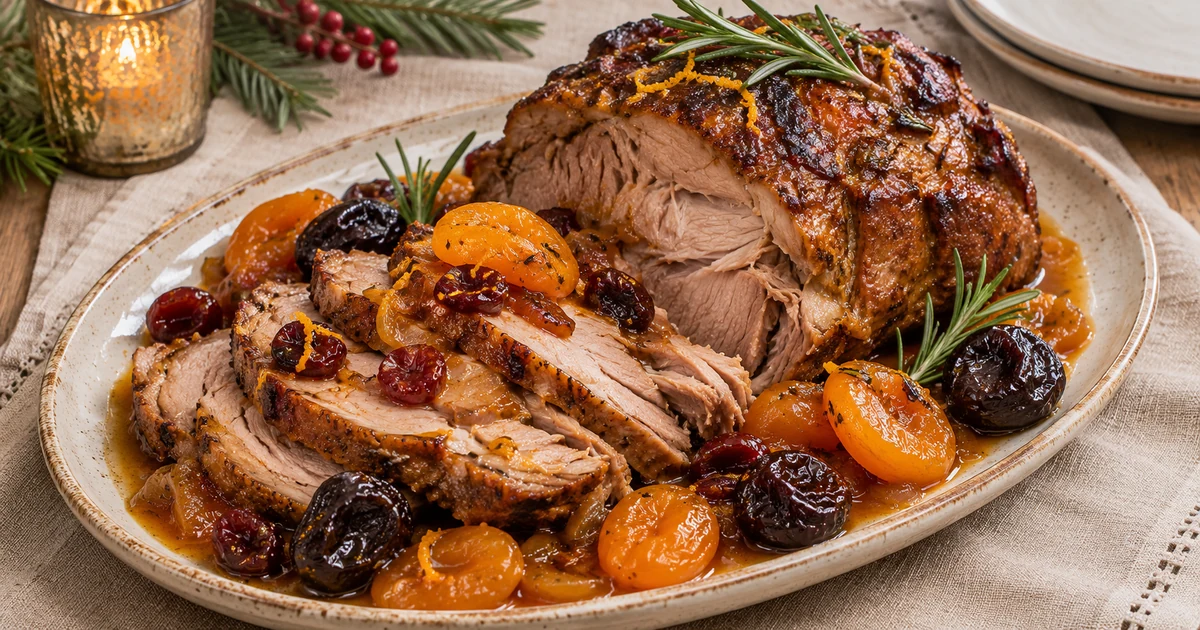
Pork roast with dried-fruit compote turns a well-marbled shoulder into a tender centerpiece with plump apricots, prunes, tart cherries, orange, rosemary, and a balanced sweet-savory sauce.
Prep: 30 min · Cook: 8 hr · Total: 8 hr 30 min
Pork Roast with Dried-Fruit Compote
Ingredients
Instructions
- Pat the pork dry and season it all over with the salt and pepper.
- Heat the olive oil in a large skillet over medium-high heat. Brown the pork well on every side, 8 to 10 minutes total, then transfer it to a 6-quart slow cooker.
- Reduce the heat to medium. Add the onion and cook for 4 minutes. Stir in the garlic for 30 seconds.
- Pour in the broth, wine, and orange juice, scraping up the browned bits. Whisk in the brown sugar, Dijon mustard, and orange zest; bring to a simmer.
- Pour the sauce and onions around the pork. Add the rosemary and thyme. Cover and cook on low for 7 to 8 hours or on high for 4 to 5 hours, until fork-tender.
- Add the apricots, prunes, and dried cherries during the final 60 to 75 minutes so they soften without falling apart.
- Transfer the roast to a platter and rest for 15 minutes. Discard the herb stems, skim excess fat from the sauce, and stir in the cider vinegar. Slice or pull the pork into large pieces, then spoon the warm fruit compote and sauce over it.
Estimated per serving: 540 calories · Protein 39 g · Fat 24 g · Carbs 38 g · Fiber 4 g · Sodium 620 mg
Why This Recipe Works
- Pork shoulder: marbling melts during the slow braise, keeping the meat succulent.
- Deep browning: builds savory flavor before the roast enters the slow cooker.
- Orange and mustard: balance the fruit's sweetness with acidity and gentle sharpness.
- Late-added fruit: becomes tender and glossy without dissolving into the sauce.
Choosing the Pork
A 3½- to 4-pound bone-in shoulder gives the richest result. A boneless shoulder cooks beautifully too; tie it with kitchen twine if it has been opened into an uneven shape. Avoid lean pork loin, which can dry out during a long braise.
Helpful Tips
- Pat the roast dry so it browns instead of steaming.
- Use unsweetened dried fruit for the best sweet-savory balance.
- Keep the cooker covered; lifting the lid slows cooking.
- Rest the pork before slicing so the juices settle.
Variations
- Apple-cranberry: replace prunes with dried apples and double the cherries.
- Spiced: add ½ teaspoon cinnamon and a pinch of cloves.
- Alcohol-free: use extra broth in place of wine.
- Fresh finish: scatter chopped parsley or toasted walnuts over the platter.
Serving Suggestions
Serve with mashed potatoes, polenta, buttered noodles, wild rice, or roasted root vegetables. A crisp green salad or lemony Brussels sprouts cuts through the rich pork and sweet fruit.
Storage and Reheating
Refrigerate pork and compote together for up to 4 days. Reheat gently, covered, with a splash of broth. Freeze in sauce for up to 3 months and thaw overnight in the refrigerator.
Frequently Asked Questions
What cut of pork is best for this recipe?
Bone-in pork shoulder is ideal because its marbling keeps the roast juicy during long, gentle cooking. Boneless shoulder also works.
Can I make this pork roast without wine?
Yes. Replace the wine with additional chicken broth and add one extra tablespoon of cider vinegar at the end.
When should I add the dried fruit?
Add it during the final 60 to 75 minutes so it becomes plump and tender while keeping its shape.
Can I cook the roast in the oven?
Yes. Braise it in a covered Dutch oven at 325°F for about 3½ to 4 hours, adding the fruit for the final hour.
How do I thicken the sauce?
Transfer the liquid to a saucepan and simmer it for 8 to 12 minutes, or whisk in a cornstarch slurry for a faster finish.
How long do leftovers keep?
Refrigerate the pork and compote in an airtight container for up to four days or freeze for up to three months.
More Slow-Cooker Dinners
Browse our dinner recipes, slow-cooker collection, and American recipes.
Prepared with AI assistance. The supplied cookbook page was used as inspiration; ingredient amounts, timing, directions, and explanatory text were independently developed and edited into an original recipe. Nutrition is an estimate.
Featured image: AI-generated food photography.