
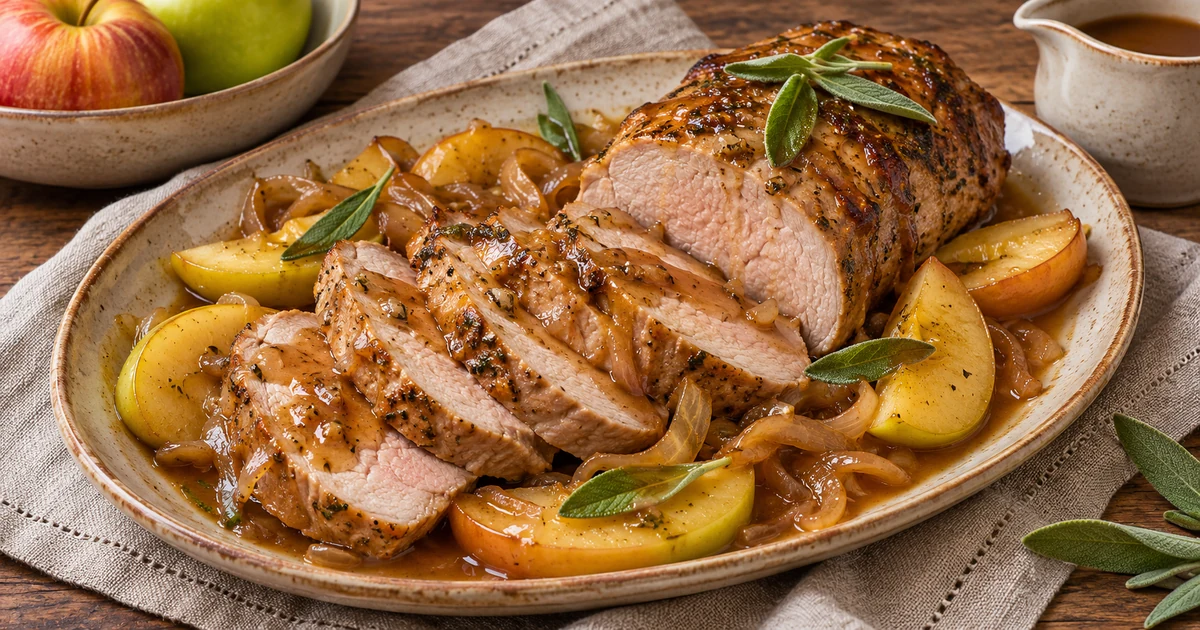
Pork loin with apples and sage combines juicy slices of lean pork with firm apples, caramelized onion, fresh herbs, and a glossy cider gravy. Careful temperature control keeps this slow-cooker roast tender rather than dry.
Prep: 30 min · Cook: 4 hr 30 min · Total: 5 hr
Pork Loin with Apples and Sage
Ingredients
Instructions
- Pat the pork loin dry. Tie it at 1½-inch intervals if needed, then season all over with 1 teaspoon salt and the pepper.
- Heat the olive oil in a large skillet over medium-high heat. Brown the pork on all sides, 8 to 10 minutes total, then transfer it to a 6-quart slow cooker.
- Reduce the heat to medium. Add the onion and cook for 4 minutes. Stir in the garlic, chopped sage, and thyme for 30 seconds.
- Pour in the broth and ¾ cup apple cider, scraping up the browned bits. Whisk in the Dijon, maple syrup, cinnamon, and remaining ½ teaspoon salt; bring to a simmer.
- Pour the sauce and onions around the pork. Cover and cook on low for 3½ to 4½ hours, until the center reaches 145°F. Add the apple wedges during the final 45 to 60 minutes.
- Transfer the pork to a cutting board and rest for 10 minutes. Move the apples to a serving bowl.
- Whisk the cornstarch with the remaining ¼ cup cider. Stir it into the slow-cooker liquid and cook on high for 5 to 10 minutes, until glossy and thickened. Stir in the cider vinegar, slice the pork across the grain, and serve with the apples, gravy, and sage leaves.
Estimated per serving: 430 calories · Protein 43 g · Fat 14 g · Carbs 30 g · Fiber 4 g · Sodium 670 mg
Why This Recipe Works
- Quick browning: gives the lean roast a savory, caramelized crust.
- Cider and mustard: balance fruity sweetness with acidity and gentle sharpness.
- Late-added apples: turn tender without disappearing into the gravy.
- 145°F finish: keeps pork loin moist and easy to slice.
Pork Loin vs. Pork Tenderloin
Pork loin is a wide roast generally weighing 2 to 4 pounds. Pork tenderloin is a narrow, very lean cut that cooks much faster. This timing is designed for pork loin; tenderloin would overcook.
Helpful Tips
- Choose a roast of even thickness or tie it with kitchen twine.
- Use an instant-read thermometer and start checking early.
- Cut apples into thick wedges so they keep their shape.
- Always slice pork across the grain for tenderness.
Variations
- Pear: substitute firm Bosc pears for half the apples.
- Herb: add rosemary with the sage and thyme.
- Maple-free: use honey or light brown sugar.
- Rich finish: whisk a tablespoon of butter into the thickened gravy.
Serving Suggestions
Serve with mashed potatoes, wild rice, buttered noodles, roasted squash, green beans, or Brussels sprouts. Spoon the cider gravy over both pork and apples.
Storage and Reheating
Refrigerate for up to 4 days. Warm slices gently in the gravy over low heat or in a covered dish at 300°F. Freeze pork and gravy for up to 3 months; apples are best fresh.
Frequently Asked Questions
What is the best pork cut for this recipe?
Use a boneless center-cut pork loin roast. It slices neatly and pairs well with apples, but it must not be confused with the much smaller pork tenderloin.
How do I keep slow-cooker pork loin from drying out?
Cook it only until the center reaches 145°F and begin checking early. Pork loin is leaner than shoulder and does not benefit from all-day cooking.
Which apples hold their shape best?
Granny Smith, Honeycrisp, Pink Lady, and Braeburn remain pleasantly firm. A mix of tart and sweet apples gives the sauce better balance.
Can I use apple juice instead of cider?
Yes. Choose unsweetened apple juice and add the cider vinegar at the end to restore acidity.
Can I make this recipe in the oven?
Yes. Cover and roast in a Dutch oven at 325°F until the pork reaches 145°F, usually 75 to 100 minutes, adding apples for the final 30 minutes.
How long do leftovers keep?
Refrigerate pork, apples, and gravy in an airtight container for up to four days. Reheat gently to avoid drying the meat.
More Pork Dinners
Browse our dinner recipes, slow-cooker collection, and American recipes.
Prepared with AI assistance. The supplied cookbook page was used as inspiration; ingredient amounts, timing, directions, and explanatory text were independently developed and edited into an original recipe. Nutrition is an estimate.
Featured image: AI-generated food photography.