
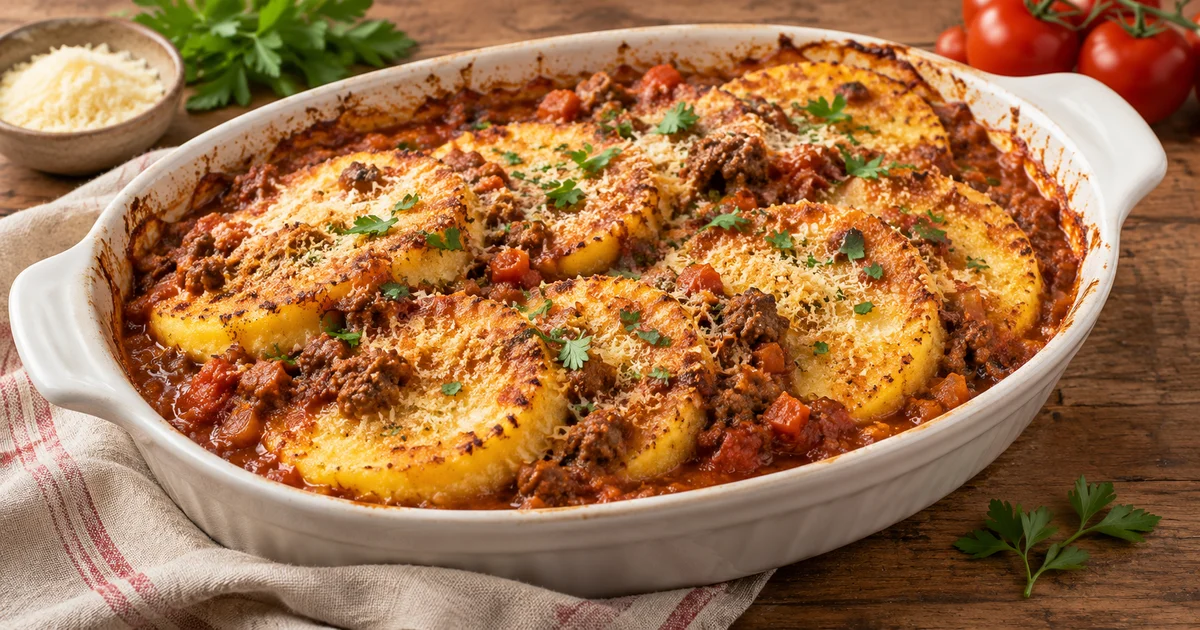
Polenta gratin with Bolognese layers golden polenta rounds with a rich beef and tomato ragù, bubbling cheese, and fresh herbs for a comforting Italian bake.
Prep: 30 min · Cook: 1 hr 10 min · Total: 1 hr 40 min
Polenta Gratin with Bolognese
Ingredients
Instructions
- Heat the olive oil in a large skillet over medium heat. Add the pancetta and cook for 4 minutes, until lightly crisp.
- Add the onion, carrot, and celery. Cook for 6 to 8 minutes until soft, then add the garlic and cook for 30 seconds.
- Add the ground beef, salt, and pepper. Cook over medium-high heat for 7 to 9 minutes, breaking it into small crumbles. Stir in the tomato paste and cook for 1 minute.
- Pour in the wine and scrape up the browned bits. Simmer for 3 minutes, then add the tomatoes, broth, oregano, and bay leaf. Simmer uncovered for 25 to 30 minutes, until thick. Discard the bay leaf.
- Heat the oven to 400°F. Butter a 9-by-13-inch baking dish. Cut the polenta into ½-inch rounds and arrange them in overlapping rows.
- Spoon the Bolognese between and over the polenta. Sprinkle with ¾ cup Parmesan and the mozzarella.
- Bake for 22 to 25 minutes, until bubbling and browned. Rest for 10 minutes, then finish with the remaining Parmesan and parsley or basil.
Estimated per serving: 590 calories · Protein 36 g · Fat 28 g · Carbs 48 g · Fiber 5 g · Sodium 980 mg
Why This Recipe Works
- Firm polenta: holds its shape while soaking up savory sauce.
- Reduced Bolognese: keeps the gratin rich instead of watery.
- Two cheeses: mozzarella melts while Parmesan adds a browned, nutty crust.
- Short rest: helps the layers settle for cleaner servings.
Choosing Polenta
Refrigerated prepared polenta is convenient and slices evenly. Homemade polenta also works when spread in a pan and chilled until firm enough to cut.
Helpful Tips
- Use low-moisture mozzarella for better browning.
- Simmer the sauce until a spoon leaves a trail across the pan.
- Overlap the polenta rounds so every serving has a sturdy base.
- Broil for 1 to 2 minutes at the end for a deeper crust.
Variations
- Spicy: add crushed red pepper to the sauce.
- Mushroom: replace half the beef with chopped cremini mushrooms.
- Turkey: use ground turkey and add an extra tablespoon of olive oil.
- Greens: fold sautéed spinach into the Bolognese.
Serving Suggestions
Serve with a lemony arugula salad, roasted broccoli, or green beans. A little extra Parmesan and fresh basil make an easy finish.
Storage and Reheating
Cover and refrigerate for up to 4 days. Reheat at 350°F until hot, covering loosely if the top browns too quickly.
Frequently Asked Questions
Can I use homemade polenta?
Yes. Spread freshly cooked polenta in an oiled pan, chill until firm, then cut it into rounds or squares before assembling the gratin.
Can I use leftover Bolognese sauce?
Absolutely. You need about four cups of thick sauce. Warm it slightly so it spreads easily over the polenta.
Why is my polenta gratin watery?
The sauce may be too thin. Simmer Bolognese uncovered until thick and drain any liquid that collects around packaged polenta.
Can I assemble it ahead?
Yes. Assemble, cover, and refrigerate for up to 24 hours. Add about 10 minutes to the baking time when cooking it cold.
What cheese can replace mozzarella?
Fontina, provolone, or low-moisture scamorza melt well. Keep Parmesan for its salty, nutty finish.
How long do leftovers keep?
Refrigerate covered for up to four days. Reheat individual portions at 350°F or in the microwave until hot.
Prepared with AI assistance. The supplied cookbook page was used as inspiration; ingredient amounts, timing, directions, and explanatory text were independently developed and edited into an original recipe. Nutrition is an estimate.
Featured image: AI-generated food photography.