
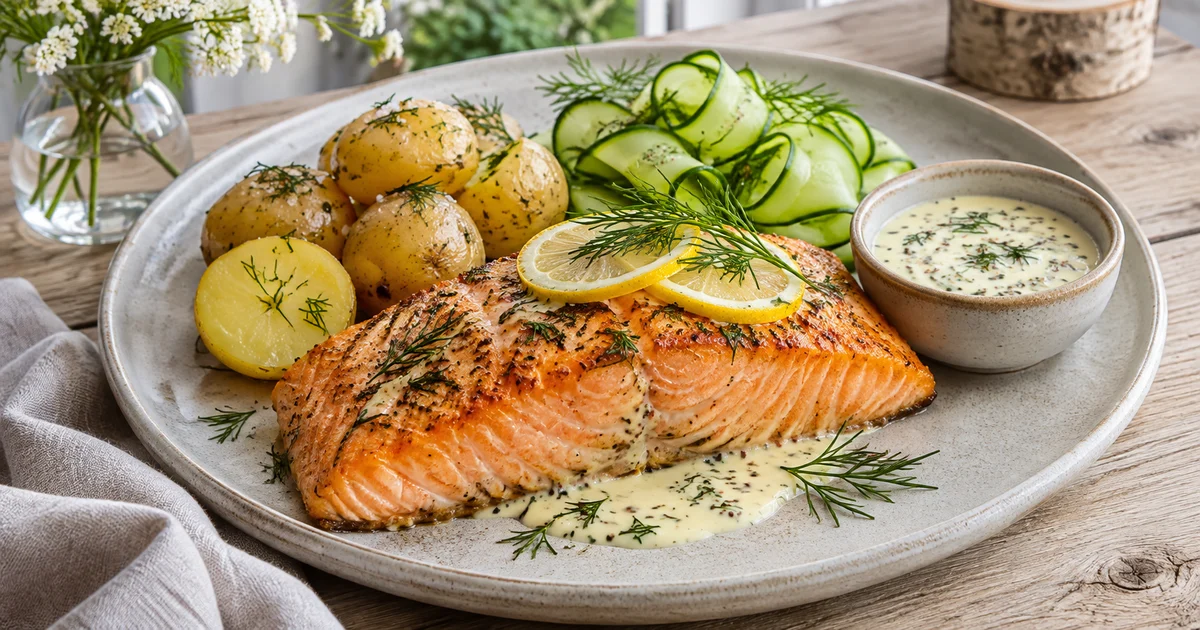
This Norwegian salmon recipe pairs a whole roasted fillet with classic Nordic flavors: fresh dill, lemon, butter, mustard, cucumber, and potatoes. The fish stays moist under a light lemon-dill butter while a cool mustard sauce adds tang and creaminess.
Norwegian salmon is Atlantic salmon raised in Norway's cold coastal waters. Its rich texture makes it especially well suited to roasting, but the same method works with another high-quality Atlantic salmon fillet.
Prep: 15 min · Cook: 20 min · Total: 35 min
Cuisine: Norwegian / Scandinavian · Course: Dinner
Norwegian Salmon with Mustard Dill Sauce
Ingredients
Instructions
- Heat the oven to 400°F. Line a rimmed baking sheet with parchment paper and place the salmon skin-side down on the pan.
- Rub the salmon with olive oil and season with kosher salt and black pepper. Stir the softened butter with 1 tablespoon dill and spread it over the fish. Arrange the lemon slices on top.
- Roast for 15 to 20 minutes, depending on thickness, until the thickest part reaches 145°F and the flesh separates easily with a fork.
- Meanwhile, whisk the yogurt, Dijon mustard, honey, garlic, vinegar, 1 tablespoon lemon juice, and the remaining 2 tablespoons dill until smooth.
- Rest the salmon for 3 minutes. Garnish with extra dill, cut into portions, and serve warm with the mustard-dill sauce.
Estimated per serving: 410 calories · Protein 39 g · Fat 26 g · Carbs 5 g · Sodium 520 mg
What Makes This a Norwegian-Style Salmon Recipe?
The ingredient combination is intentionally simple and Nordic-inspired: salmon, dill, lemon, butter, mustard, cucumber, and potatoes. Norwegian seafood sources commonly pair roasted salmon with lemon, dill, butter, and potatoes; mustard-dill sauces are also a familiar Scandinavian accompaniment to salmon.
How to Choose Norwegian Salmon
Look for salmon identified as Norwegian Atlantic salmon at the fish counter or on the package. Choose a fillet with moist, glossy flesh, an even coral color, and a clean ocean scent. A center-cut side of salmon cooks more evenly than a sharply tapered tail section.
Preparing a Whole Side of Salmon
Run your fingertips over the flesh and remove any pin bones with clean tweezers. Leave the skin on: it helps hold the large fillet together and protects the bottom from drying out. Pat the surface dry so the butter mixture clings evenly.
How Long to Bake Norwegian Salmon
At 400°F, a 2- to 2½-pound side generally needs 15–20 minutes. Begin checking early because thickness matters more than weight. For food safety, cook fish to 145°F in the thickest part, or until the flesh is opaque and separates easily with a fork.
Mustard Dill Sauce
The cool sauce balances the rich salmon. Greek yogurt gives it a lighter, tangier texture, while sour cream makes it more luxurious. Dijon mustard, honey, vinegar, lemon, garlic, and plenty of dill create the sweet-sharp flavor. Make it up to one day ahead and refrigerate.
What to Serve with Norwegian Salmon
- Boiled baby potatoes tossed with butter and dill
- Thin cucumber ribbons with a splash of vinegar
- Roasted asparagus or green beans
- Dark rye bread or crispbread
- Steamed peas or a simple leafy salad
Recipe Variations
For honey-mustard salmon, brush the fish with a blend of Dijon, honey, lemon, and dill before roasting. For a simpler lemon-butter version, omit the sauce and double the lemon-dill butter. Individual fillets also work; begin checking them after 10 minutes.
Storage and Reheating
Refrigerate cooked salmon and sauce separately in airtight containers for up to 3 days. Reheat salmon gently in a 300°F oven until warm, or serve it cold with cucumber and rye bread. Do not leave the yogurt sauce at room temperature for more than 2 hours.
Frequently Asked Questions
Is Norwegian salmon wild or farmed?
Salmon sold as Norwegian salmon is generally farm-raised Atlantic salmon from Norway. Read the package or ask the fish counter for the exact origin and production method.
Can I use frozen Norwegian salmon?
Yes. Thaw it overnight in the refrigerator, drain any liquid, and pat it very dry before adding the butter mixture.
Can I cook individual salmon portions?
Yes. Bake 5- to 6-ounce fillets at 400°F for roughly 10–14 minutes, checking the thickest piece with a thermometer.
Can I make the sauce without dairy?
Use a thick unsweetened plant-based yogurt or make a vinaigrette with Dijon, honey, vinegar, lemon, dill, and olive oil.
Prepared with AI assistance. Ingredient amounts and directions were developed and edited into an original Norwegian-inspired recipe. Nutrition is an estimate.
Featured image: AI-generated food photography.