
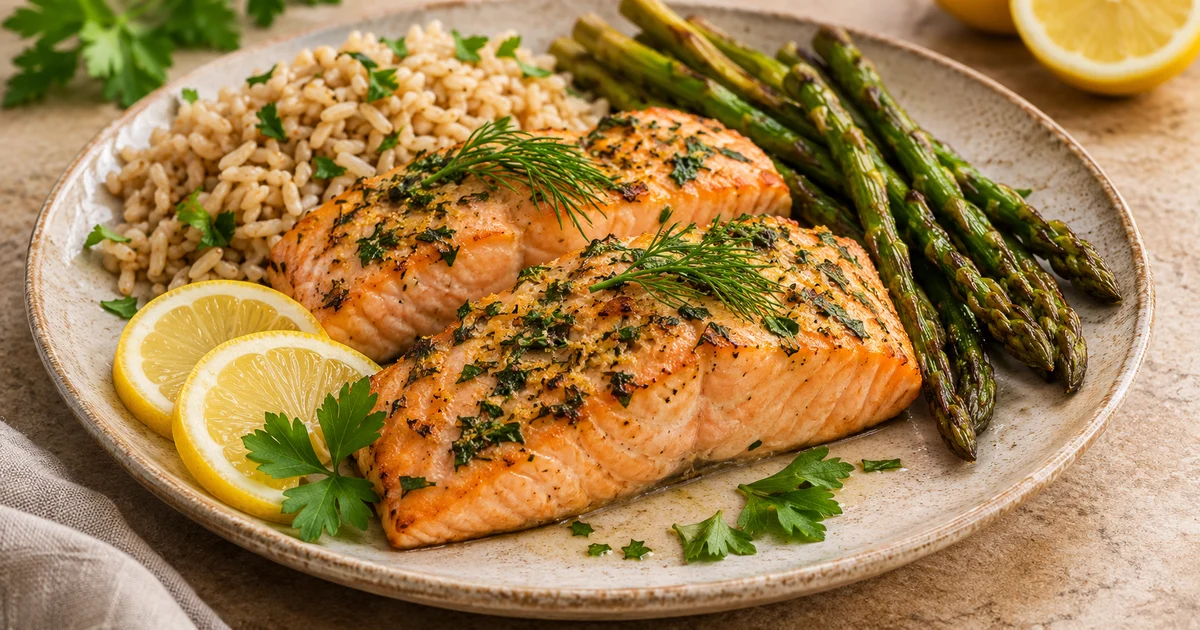
These low-sodium salmon recipes rely on citrus, garlic, fresh herbs, toasted spices, and high-heat cooking for flavor instead of a heavy shake of salt. The featured lemon-herb salmon is quick enough for a weeknight and uses no added salt.
Fresh or plain frozen salmon is the best starting point. Check package labels carefully: brined, smoked, cured, and pre-seasoned salmon can contain substantially more sodium.
Prep: 10 min · Cook: 14 min · Total: 24 min
Cuisine: American · Course: Dinner
Low-Sodium Lemon Herb Baked Salmon
Ingredients
Instructions
- Heat the oven to 400°F. Line a rimmed baking sheet with parchment paper and pat the salmon fillets dry.
- Whisk the olive oil, lemon juice, lemon zest, garlic, dill, parsley, paprika, and black pepper in a small bowl.
- Place the salmon skin-side down on the prepared pan. Spoon the herb mixture evenly over the tops and sides of the fillets.
- Bake for 10 to 14 minutes, depending on thickness, until the salmon flakes easily and reaches 145°F in the thickest part.
- Rest for 2 minutes. Serve with fresh lemon wedges and spoon any flavorful pan juices over the fish.
Estimated per serving: 330 calories · Protein 34 g · Fat 20 g · Carbs 2 g · Sodium 95 mg
What Makes This Salmon Low in Sodium?
The recipe contains no added salt and uses plain salmon rather than a brined or seasoned product. Its estimated 95 mg sodium per serving is about 4% of the FDA Daily Value. The FDA considers 5% Daily Value or less per serving low in sodium and sets the Daily Value at less than 2,300 mg per day. Sodium varies by fish and brand, so always use the package label when available.
Five Low-Sodium Salmon Flavor Ideas
1. Lemon Dill Salmon
Use the printable recipe below for a fresh combination of lemon zest, lemon juice, garlic, dill, parsley, paprika, and pepper.
2. Maple Ginger Salmon
Mix 1 tablespoon pure maple syrup with grated ginger, garlic, lime zest, and 1 teaspoon toasted sesame oil. Skip regular soy sauce; if you add a reduced-sodium version, include its sodium in your total.
3. Smoky Paprika Salmon
Coat the fish with olive oil, smoked paprika, cumin, garlic powder, black pepper, and a squeeze of lime. Toasted spices give the crust a savory depth without salt.
4. Orange Rosemary Salmon
Combine orange zest and juice with chopped rosemary, garlic, olive oil, and black pepper. A small spoonful of honey can balance the citrus.
5. Parsley-Almond Crusted Salmon
Press a mixture of finely chopped unsalted almonds, parsley, lemon zest, garlic, and olive oil onto the fillets before baking.
How to Add Flavor Without Salt
- Use both citrus zest and juice for aroma and acidity.
- Choose fresh garlic, ginger, scallions, dill, parsley, basil, or rosemary.
- Bloom paprika, cumin, coriander, or pepper in a little oil.
- Add texture with unsalted nuts, seeds, or toasted whole-grain crumbs.
- Check seasoning blends and sauces for hidden sodium.
Shopping Tips
Buy fresh salmon or plain frozen fillets with salmon as the only ingredient. Compare labels and avoid fish labeled brined, injected, smoked, cured, teriyaki, blackened, or pre-seasoned unless the nutrition panel fits your plan. No-salt-added frozen vegetables and plain grains make easy sides.
Safe Cooking Temperature
Cook salmon to 145°F in the thickest part, as recommended by U.S. food-safety guidance. A thermometer is more reliable than color alone. The flesh should also be opaque and separate easily with a fork.
Low-Sodium Side Dishes
Serve the salmon with brown rice, quinoa, roasted sweet potatoes, asparagus, green beans, broccoli, or a lemony cabbage salad. Season sides with herbs, citrus, vinegar, garlic, and olive oil instead of salty bottled sauces.
Storage and Reheating
Refrigerate cooked salmon in an airtight container for up to 3 days. Reheat gently in a 300°F oven until warm, or enjoy it cold over a salad. Avoid repeated reheating, which can dry out the fish.
Frequently Asked Questions
Is fresh salmon naturally low in sodium?
Plain salmon is naturally much lower in sodium than smoked, cured, brined, or heavily seasoned salmon. The exact amount varies, so check the nutrition label.
Can I use canned salmon?
Yes, but compare labels and look for no-salt-added or low-sodium canned salmon. Draining and rinsing may reduce some surface sodium, but the label remains the best guide.
Can I cook this recipe in an air fryer?
Yes. Air-fry the coated fillets at 390°F for about 7–10 minutes, depending on thickness, until the center reaches 145°F.
Is this medical advice?
No. Sodium needs can differ, especially for people with heart, kidney, or blood-pressure conditions. Follow the target provided by your clinician or registered dietitian.
Prepared with AI assistance. Ingredient amounts and directions were developed and edited into an original recipe. Nutrition is an estimate; verify labels when managing sodium for a medical condition.
Featured image: AI-generated food photography.