
Which Rice Works Best for Stuffed Peppers?
Cooked long-grain white rice is the best all-purpose choice for stuffed peppers. Its grains separate easily, so a forkful picks up a little tomato, meat and pepper along with the rice. Its mild flavor also leaves room for the seasoning. Choose brown rice if you want a chewier bite, or basmati if the filling leans toward cumin, lemon and herbs.
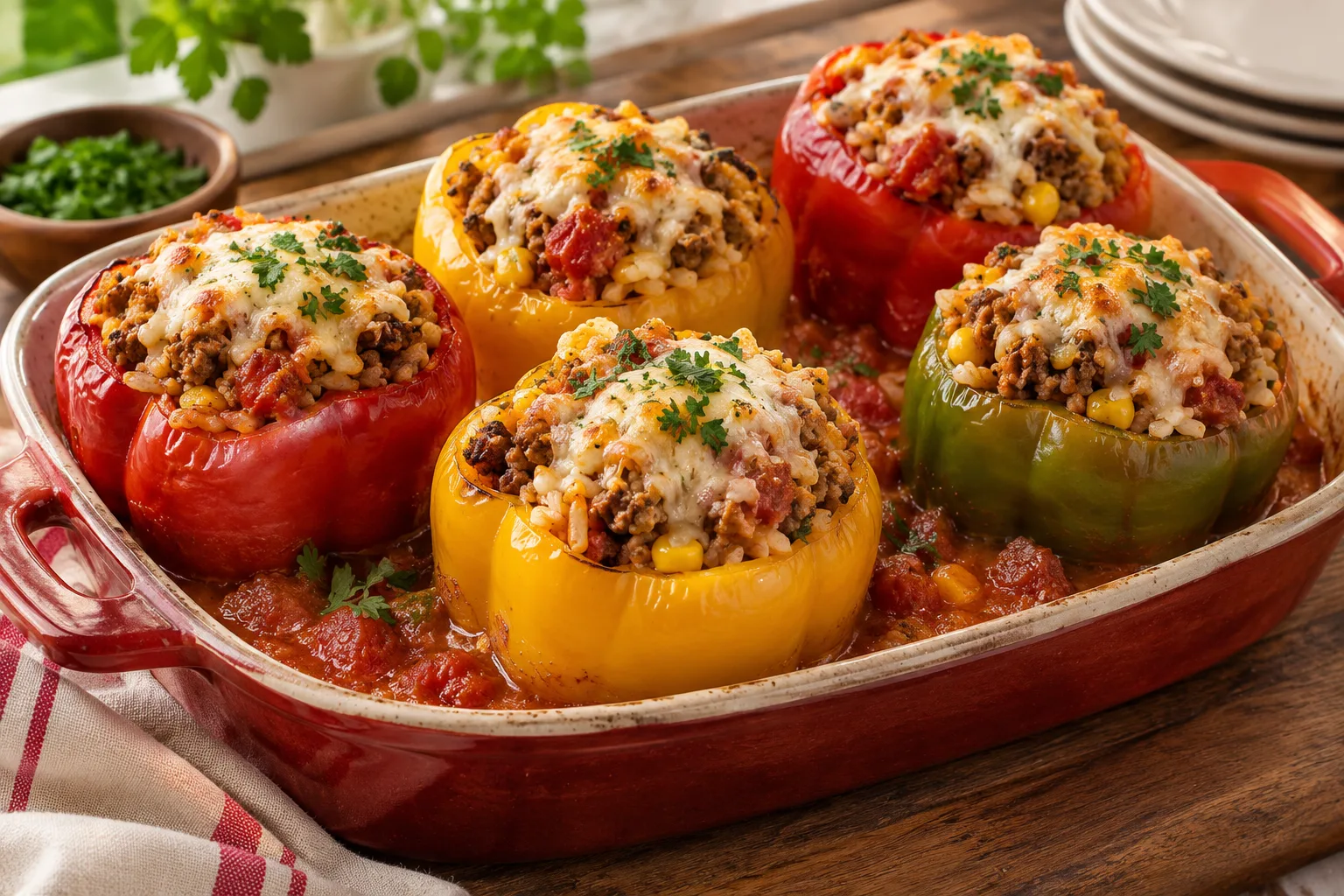
Choose the rice by the filling you want
- Long-grain white rice: A dependable choice with ground beef, turkey and tomato sauce. Fluff it before folding it in so the grains distribute evenly among the crumbles of meat.
- Basmati: Long, slender grains give the filling a lighter texture. Try it with chickpeas, toasted cumin and parsley, then finish the baked peppers with lemon.
- Brown rice: The firmer grains hold their own alongside chopped mushrooms or beans. Cook it until tender before stuffing. Its longer cooking time makes it a poor swap for raw white rice in a timed bake.
- Short-grain white rice: A good choice when you like a filling that holds together as you slice the pepper. Fold it in gently with a fork. Mashing or packing it tightly produces a dense center.
Should you cook the rice first?
Check the ingredient line. If it says “1 cup cooked rice,” cook the rice first, fluff it, then measure out a cup. A cup of dry rice makes several cups once cooked. Swapping the two changes both the amount of filling and the liquid the grains need.
Raw rice can work in a recipe designed around it. Those recipes allow for liquid, trapped steam, room for the grains to swell and a longer cooking time. A spoonful of tomato sauce in an open pepper half won’t reliably cook a scoop of dry rice. For a recipe written for cooked rice, the simplest fix is to cook it separately while you prepare the peppers.
How much rice goes in each pepper?
Our Festive Stuffed Peppers use 1 cup of cooked rice and 8 ounces of ground beef or turkey for two bell peppers cut lengthwise. That works out to ¼ cup of cooked rice per half, before the corn, meat and sauce go in. Use that as a starting point for a mixed filling. The size of the pepper cavities determines how much they’ll actually hold.
Keep the filling moist and the grains distinct
Drain any pooled liquid from cooked vegetables, then fold the fluffed rice into the filling. Add sauce a spoonful at a time until it coats the grains. A spoonful of filling should form a loose mound without leaving a puddle. Spoon it into each pepper and level the top lightly. Leaving the grains a little space gives the finished pepper a tender center you can cut with a fork.